_edited.png)
.png)


ACCREDITATIONS


Clients





RESULTS-ORIENTED Training Description
Course Duration
5 Days
Training Delivery Method
Classroom (Instructor-Led)
Instructors Languages
English / Arabic / Urdu / Hindi / Pashto
Certification Provider
Tamkene Training Services - Approved by TVTC (Technical and Vocational Training Corporation)
Certificate Validity
2 Years (Extendable with additional training hours)
Course Average Passing Rate
97%
Competency Assessment Criteria
Practical Assessment and Knowledge Assessment
Post Training Reporting
Post Training Report(s) + Candidate(s) Training Evaluation Forms
Training Design Methodology
ADDIE Training Design Methodology
Certificate of Successful Completion
Certification is provided upon successful completion. The certificate can be verified through a QR-Code system.
Course Overview
This comprehensive Fire Brigade training course provides participants with essential knowledge and practical skills required for effective industrial fire response and emergency operations. The course addresses critical aspects of fire behavior, firefighting techniques, rescue operations, and incident command in accordance with NFPA 600 Standard on Industrial Fire Brigades, OSHA 29 CFR 1910.156 Fire Brigades, and ISO 23601 Safety Identification—Escape and Evacuation Plan Signs.
Participants will learn to apply industry best practices and regulatory requirements to conduct safe and effective fire suppression, perform emergency rescue operations, and manage complex fire incidents. This course combines theoretical principles with extensive hands-on training, enabling participants to operate firefighting equipment, execute tactical operations, implement incident command systems, and respond to diverse industrial fire scenarios while ensuring team safety and operational effectiveness.
Key Learning Objectives
Understand fundamental fire science principles and industrial fire behavior
Apply NFPA 600 and OSHA 29 CFR 1910.156 requirements to fire brigade operations
Operate self-contained breathing apparatus (SCBA) and respiratory protection equipment
Execute fire attack strategies using portable and fixed firefighting systems
Perform search and rescue operations in hazardous and low-visibility environments
Implement Incident Command System (ICS) for fire emergency management
Respond to specialized industrial fire scenarios including chemical and flammable liquid fires
Conduct fire prevention inspections and pre-incident planning activities
Apply emergency medical care and victim stabilization techniques
Coordinate with external emergency services and mutual aid organizations
Course Outline
1. Introduction to Industrial Fire Brigades
1.1 Fire Brigade Organization and Responsibilities
Fire brigade organizational structures including (incipient fire response teams, interior structural brigades, industrial fire departments, and specialty response teams)
OSHA 29 CFR 1910.156 organizational requirements including (brigade composition, member qualifications, training standards, and written organizational statements)
NFPA 600 scope and application including (facility risk assessment, brigade capabilities determination, performance standards, and operational guidelines)
Roles and responsibilities including (fire brigade leader duties, member functions, support personnel, and incident commander authority)
1.2 Fire Science Fundamentals
Fire behavior principles including (fire triangle and tetrahedron, combustion process, heat transfer methods, and flame spread mechanisms)
Classification of fires including (Class A combustibles, Class B flammable liquids, Class C electrical, Class D metals, and Class K cooking oils)
Stages of fire development including (incipient phase, growth phase, fully developed, and decay per NFPA 921)
Building construction and fire effects including (structural components, collapse indicators, fire load assessment, and thermal degradation)
2. Personal Protective Equipment and Respiratory Protection
2.1 Structural Firefighting PPE
Turnout gear components and standards including (coat and pants per NFPA 1971, helmet, hood, boots, and gloves)
PPE inspection and maintenance including (daily checks, damage assessment, cleaning procedures, and retirement criteria)
Proper donning and doffing procedures including (sequence protocols, buddy checks, contamination control, and time benchmarks)
Thermal protection and limitations including (heat stress management, duration limits, rehabilitation requirements, and situational awareness)
2.2 Self-Contained Breathing Apparatus (SCBA)
SCBA components and operation per NFPA 1981 including (facepiece assembly, regulator, cylinder, and harness systems)
Pre-use inspection procedures including (pressure checks, seal verification, alarm testing, and functional assessment)
Donning and activation techniques including (over-the-head method, coat method, emergency donning, and buddy breathing)
Air management and emergency procedures including (consumption monitoring, low-air alarms, emergency breathing support systems, and escape protocols)
3. Fire Suppression Equipment and Extinguishing Agents
3.1 Portable Fire Extinguishers
Extinguisher types and applications per NFPA 10 including (water, foam, dry chemical, carbon dioxide, and clean agents)
Selection criteria and placement including (hazard classification, travel distance, capacity requirements, and accessibility per OSHA 29 CFR 1910.157)
Operating techniques including (PASS method, approach distances, sweep patterns, and backup procedures)
Inspection and maintenance including (monthly checks, annual servicing, hydrostatic testing, and documentation requirements)
3.2 Fire Hoses and Nozzles
Hose types and specifications per NFPA 1961 including (attack lines, supply lines, hard suction, and specialty hoses)
Nozzle selection and operation including (smooth bore, fog patterns, variable flow, and specialized applicators)
Hose deployment techniques including (shoulder load, preconnected lines, hose advancement, and stream application)
Hose handling evolutions including (hose rolls, coupling and uncoupling, drain and dry procedures, and storage methods)
3.3 Fixed Fire Protection Systems
Automatic sprinkler systems per NFPA 13 including (wet pipe, dry pipe, deluge, and pre-action systems)
Standpipe and hose systems per NFPA 14 including (Class I, II, and III systems, pressure requirements, and connection points)
Foam systems per NFPA 11 including (low expansion, high expansion, foam concentrate types, and application methods)
Special extinguishing systems including (clean agent systems per NFPA 2001, water mist, and inert gas systems)
4. Firefighting Tactics and Operations
4.1 Size-up and Incident Assessment
Initial incident size-up components including (occupancy type, fire location, visible conditions, and resource needs assessment)
Risk assessment and decision-making including (risk versus gain analysis, offensive versus defensive operations, and tactical priorities)
360-degree assessment including (structure reconnaissance, exposure identification, access and egress routes, and utilities location)
Information gathering and communication including (building pre-plans, hazardous materials identification, occupancy status, and command updates)
4.2 Fire Attack Strategies
Offensive interior attack including (direct attack, indirect attack, combination attack, and transitional attack methods)
Defensive operations including (exterior streams, master stream placement, exposure protection, and surround and drown)
Ventilation techniques including (horizontal ventilation, vertical ventilation, positive pressure ventilation, and tactical ventilation timing)
Search and rescue priorities including (primary search procedures, secondary search methods, victim location techniques, and victim removal)
4.3 Water Supply and Hydraulics
Water supply sources including (municipal hydrants, static sources, relay operations, and portable tank operations)
Pump operations fundamentals including (centrifugal pump theory, pressure calculations, net pump pressure, and flow requirements)
Friction loss calculations including (hose diameter effects, length considerations, appliance losses, and elevation changes)
Fire stream effectiveness including (reach, penetration, flow requirements per NFPA 1710, and nozzle reaction)
5. Specialized Industrial Fire Scenarios
5.1 Flammable Liquid Fires
Flammable and combustible liquid properties including (flash point, ignition temperature, vapor density, and boiling liquid expanding vapor explosion BLEVE)
Tank fire tactics including (tank cooling, foam application, exposure protection, and runoff control)
Spill fire management including (vapor suppression, foam blanket application, ignition source control, and containment)
Safety considerations including (boilover phenomena, slopover risks, frothover conditions, and withdrawal protocols per NFPA 30)
5.2 Chemical and Hazardous Materials Fires
Hazard identification per NFPA 704 including (health, flammability, instability, and special hazards diamonds)
Chemical fire behavior including (reactive materials, oxidizers, pyrophoric substances, and water-reactive chemicals)
Protective actions including (isolation distances, evacuation zones, shelter-in-place decisions, and decontamination corridors)
Response strategies including (defensive operations, technical specialist consultation, hazmat team coordination, and environmental protection)
5.3 Electrical and Equipment Fires
Electrical fire hazards including (energized equipment, arc flash risks, insulation failure, and overcurrent conditions)
De-energization procedures including (lockout/tagout per OSHA 29 CFR 1910.147, utility coordination, verification testing, and grounding)
Suppression techniques including (Class C extinguishing agents, non-conductive streams, equipment isolation, and cooling methods)
Special equipment fires including (transformers, switchgear, cable trays, and battery storage systems)
5.4 Confined Space Fire and Rescue
Confined space identification per OSHA 29 CFR 1910.146 including (permit-required spaces, atmospheric hazards, configuration hazards, and engulfment risks)
Pre-entry planning including (atmospheric monitoring, ventilation strategies, rescue equipment staging, and communication systems)
Entry and rescue procedures including (entry team composition, safety attendant duties, retrieval systems, and backup team readiness)
Firefighting in confined spaces including (limited access challenges, ventilation coordination, hose advancement techniques, and emergency egress)
6. Search and Rescue Operations
6.1 Search Techniques and Procedures
Primary search methods including (oriented search, left-hand/right-hand search, large area search, and victim-oriented search)
Search tools and equipment including (thermal imaging cameras, search ropes, forcible entry tools, and personal alert safety systems PASS)
Low-visibility navigation including (wall following, tag lines, breadcrumb systems, and team integrity maintenance)
Victim location indicators including (bedrooms, bathrooms, windows, doors, and furniture patterns)
6.2 Victim Rescue and Removal
Victim assessment including (consciousness level, injury severity, entrapment conditions, and movement capability)
Rescue carries and drags including (firefighter carry, extremity drag, blanket drag, and webbing sling techniques)
Ladder rescue operations including (victim packaging, secured descent, aerial ladder rescues, and ground ladder applications)
Technical rescue coordination including (structural collapse, vehicle extrication, rope rescue, and specialized team deployment)
6.3 Rapid Intervention Teams (RIT)
RIT deployment criteria per NFPA 1407 including (interior operations, IDLH atmospheres, crew accountability, and activation triggers)
RIT equipment and tools including (search ropes, air supply systems, breaching tools, and victim packaging devices)
Firefighter emergency procedures including (MAYDAY declaration, personnel accountability report PAR, emergency traffic protocols, and last known location)
RIT operations including (search patterns, air supply strategies, disentanglement techniques, and emergency egress routes)
7. Incident Command and Emergency Management
7.1 Incident Command System (ICS)
ICS organizational structure per NFPA 1561 including (command, operations, planning, logistics, and finance/administration sections)
Command establishment and transfer including (initial incident commander, unified command, command transfer protocols, and command post location)
Span of control and resource management including (division/group assignments, strike teams, task forces, and staging areas)
Strategic and tactical priorities including (life safety, incident stabilization, property conservation, and environmental protection)
7.2 Personnel Accountability Systems
Accountability methods per NFPA 1982 including (passport systems, tactical worksheets, electronic tracking, and company officer responsibility)
Crew integrity maintenance including (team composition, supervisor-subordinate ratios, direct observation, and communication protocols)
Personnel Accountability Report (PAR) including (regular intervals, benchmark completions, emergency evacuations, and roll call procedures)
MAYDAY management including (immediate action protocols, rescue group assignment, investigation team, and communication priorities)
7.3 Post-Incident Operations
Overhaul and salvage including (hot spot detection, debris removal, property protection, and loss minimization)
Scene preservation and investigation including (origin and cause determination, evidence protection, fire investigator coordination, and documentation per NFPA 921)
Incident debriefing including (tactical review, lessons learned, performance evaluation, and improvement recommendations)
Equipment inspection and rehabilitation including (SCBA refilling, hose testing, PPE decontamination, and apparatus restocking)
8. Fire Prevention and Pre-Incident Planning
8.1 Fire Inspection and Code Enforcement
Fire code fundamentals per NFPA 1 including (means of egress, fire-resistive construction, fire protection systems, and hazardous materials storage)
Inspection procedures including (inspection checklists, violation documentation, correction orders, and follow-up protocols)
Common fire hazards including (housekeeping deficiencies, electrical hazards, exit obstructions, and system impairments)
Prevention program elements including (public education, code compliance, plan review, and occupancy inspections)
8.2 Pre-Incident Planning
Building information collection including (construction type, occupancy classification, fire protection systems, and utility locations)
Hazard identification including (process hazards, chemical inventories, high-value areas, and special protection requirements)
Tactical considerations including (access points, water supply locations, apparatus positioning, and evacuation routes)
Pre-plan documentation including (site maps, floor plans, hazard symbols per NFPA 170, and contact information)
9. Emergency Medical Operations
9.1 Basic Life Support and First Aid
Scene safety and assessment including (hazard recognition, personal protection, mechanism of injury, and incident prioritization)
Primary and secondary surveys including (airway, breathing, circulation, disability, and exposure assessment)
CPR and AED operation per AHA/Red Cross guidelines including (compression techniques, rescue breathing, AED application, and team coordination)
Bleeding control and shock management including (direct pressure, tourniquets, hemostatic agents, and patient positioning)
9.2 Firefighter Rehabilitation
Rehabilitation criteria per NFPA 1584 including (work cycle duration, environmental conditions, SCBA consumption, and vital signs monitoring)
Rehabilitation sector operations including (location selection, medical monitoring, hydration, and cooling/warming measures)
Medical evaluation including (heart rate, blood pressure, temperature, and symptom assessment)
Return to duty criteria including (vital signs recovery, adequate hydration, mental status, and medical clearance)
10. Practical Firefighting Evolutions
10.1 Live Fire Training
Training burn facilities per NFPA 1403 including (acquired structures, fixed training facilities, outdoor props, and safety requirements)
Scenario-based evolutions including (room and contents fires, vehicle fires, flammable liquid fires, and basement fires)
Safety officer and instructor duties including (safety briefings, ignition control, emergency procedures, and continuous monitoring)
Performance evaluation including (tactical effectiveness, safety compliance, teamwork assessment, and skill proficiency)
10.2 Hands-On Skill Stations
SCBA proficiency including (emergency breathing, mask confidence, air conservation, and emergency egress)
Hose handling and stream application including (line advancement, nozzle control, flow patterns, and team coordination)
Forcible entry techniques including (door breaching, window removal, wall penetration, and lock manipulation)
Ladder operations including (ground ladder raises, climbing, roof access, and rescue applications)
11. Physical Fitness and Occupational Health
11.1 Firefighter Physical Fitness
Job-related fitness components including (cardiovascular endurance, muscular strength, flexibility, and body composition)
Fitness assessment methods including (candidate physical ability test CPAT benchmarks, job-specific tasks, and performance standards)
Training program development including (aerobic conditioning, strength training, flexibility exercises, and injury prevention)
Nutrition and hydration including (caloric needs, macronutrient balance, pre-incident fueling, and recovery nutrition)
11.2 Occupational Health and Safety
Health hazards in firefighting including (smoke inhalation, heat stress, carcinogens, and cardiovascular risks)
Cancer prevention strategies including (gross decontamination, PPE cleaning per NFPA 1851, exposure reduction, and medical surveillance)
Mental health and stress management including (critical incident stress, PTSD awareness, peer support programs, and professional resources)
Medical surveillance programs per NFPA 1582 including (baseline physicals, periodic examinations, fitness for duty, and occupational injury management)
12. Case Studies and Tactical Simulations
12.1 Industrial Fire Case Studies
Regional industrial incidents from Middle East facilities including (petrochemical fires, warehouse fires, manufacturing plant emergencies, and large-scale evacuations)
Incident analysis including (contributing factors, tactical decisions, lessons learned, and prevention strategies)
After-action reviews including (performance evaluation, procedure effectiveness, training needs identification, and improvement recommendations)
Multi-agency coordination examples including (mutual aid operations, unified command scenarios, and resource sharing agreements)
12.2 Tabletop Exercises and Simulations
Scenario development including (facility-specific hazards, realistic conditions, decision points, and resource constraints)
Command and control exercises including (incident command practice, tactical worksheets, resource allocation, and communication protocols)
Problem-solving scenarios including (simultaneous incidents, resource limitations, rescue dilemmas, and strategic trade-offs)
The importance of proper training in successful fire brigade operations and emergency response effectiveness
1. Introduction to Industrial Fire Brigades
1.1 Fire Brigade Organization and Responsibilities
Fire brigade organizational structures including (incipient fire response teams, interior structural brigades, industrial fire departments, and specialty response teams)
OSHA 29 CFR 1910.156 organizational requirements including (brigade composition, member qualifications, training standards, and written organizational statements)
NFPA 600 scope and application including (facility risk assessment, brigade capabilities determination, performance standards, and operational guidelines)
Roles and responsibilities including (fire brigade leader duties, member functions, support personnel, and incident commander authority)
1.2 Fire Science Fundamentals
Fire behavior principles including (fire triangle and tetrahedron, combustion process, heat transfer methods, and flame spread mechanisms)
Classification of fires including (Class A combustibles, Class B flammable liquids, Class C electrical, Class D metals, and Class K cooking oils)
Stages of fire development including (incipient phase, growth phase, fully developed, and decay per NFPA 921)
Building construction and fire effects including (structural components, collapse indicators, fire load assessment, and thermal degradation)
2. Personal Protective Equipment and Respiratory Protection
2.1 Structural Firefighting PPE
Turnout gear components and standards including (coat and pants per NFPA 1971, helmet, hood, boots, and gloves)
PPE inspection and maintenance including (daily checks, damage assessment, cleaning procedures, and retirement criteria)
Proper donning and doffing procedures including (sequence protocols, buddy checks, contamination control, and time benchmarks)
Thermal protection and limitations including (heat stress management, duration limits, rehabilitation requirements, and situational awareness)
2.2 Self-Contained Breathing Apparatus (SCBA)
SCBA components and operation per NFPA 1981 including (facepiece assembly, regulator, cylinder, and harness systems)
Pre-use inspection procedures including (pressure checks, seal verification, alarm testing, and functional assessment)
Donning and activation techniques including (over-the-head method, coat method, emergency donning, and buddy breathing)
Air management and emergency procedures including (consumption monitoring, low-air alarms, emergency breathing support systems, and escape protocols)
3. Fire Suppression Equipment and Extinguishing Agents
3.1 Portable Fire Extinguishers
Extinguisher types and applications per NFPA 10 including (water, foam, dry chemical, carbon dioxide, and clean agents)
Selection criteria and placement including (hazard classification, travel distance, capacity requirements, and accessibility per OSHA 29 CFR 1910.157)
Operating techniques including (PASS method, approach distances, sweep patterns, and backup procedures)
Inspection and maintenance including (monthly checks, annual servicing, hydrostatic testing, and documentation requirements)
3.2 Fire Hoses and Nozzles
Hose types and specifications per NFPA 1961 including (attack lines, supply lines, hard suction, and specialty hoses)
Nozzle selection and operation including (smooth bore, fog patterns, variable flow, and specialized applicators)
Hose deployment techniques including (shoulder load, preconnected lines, hose advancement, and stream application)
Hose handling evolutions including (hose rolls, coupling and uncoupling, drain and dry procedures, and storage methods)
3.3 Fixed Fire Protection Systems
Automatic sprinkler systems per NFPA 13 including (wet pipe, dry pipe, deluge, and pre-action systems)
Standpipe and hose systems per NFPA 14 including (Class I, II, and III systems, pressure requirements, and connection points)
Foam systems per NFPA 11 including (low expansion, high expansion, foam concentrate types, and application methods)
Special extinguishing systems including (clean agent systems per NFPA 2001, water mist, and inert gas systems)
4. Firefighting Tactics and Operations
4.1 Size-up and Incident Assessment
Initial incident size-up components including (occupancy type, fire location, visible conditions, and resource needs assessment)
Risk assessment and decision-making including (risk versus gain analysis, offensive versus defensive operations, and tactical priorities)
360-degree assessment including (structure reconnaissance, exposure identification, access and egress routes, and utilities location)
Information gathering and communication including (building pre-plans, hazardous materials identification, occupancy status, and command updates)
4.2 Fire Attack Strategies
Offensive interior attack including (direct attack, indirect attack, combination attack, and transitional attack methods)
Defensive operations including (exterior streams, master stream placement, exposure protection, and surround and drown)
Ventilation techniques including (horizontal ventilation, vertical ventilation, positive pressure ventilation, and tactical ventilation timing)
Search and rescue priorities including (primary search procedures, secondary search methods, victim location techniques, and victim removal)
4.3 Water Supply and Hydraulics
Water supply sources including (municipal hydrants, static sources, relay operations, and portable tank operations)
Pump operations fundamentals including (centrifugal pump theory, pressure calculations, net pump pressure, and flow requirements)
Friction loss calculations including (hose diameter effects, length considerations, appliance losses, and elevation changes)
Fire stream effectiveness including (reach, penetration, flow requirements per NFPA 1710, and nozzle reaction)
5. Specialized Industrial Fire Scenarios
5.1 Flammable Liquid Fires
Flammable and combustible liquid properties including (flash point, ignition temperature, vapor density, and boiling liquid expanding vapor explosion BLEVE)
Tank fire tactics including (tank cooling, foam application, exposure protection, and runoff control)
Spill fire management including (vapor suppression, foam blanket application, ignition source control, and containment)
Safety considerations including (boilover phenomena, slopover risks, frothover conditions, and withdrawal protocols per NFPA 30)
5.2 Chemical and Hazardous Materials Fires
Hazard identification per NFPA 704 including (health, flammability, instability, and special hazards diamonds)
Chemical fire behavior including (reactive materials, oxidizers, pyrophoric substances, and water-reactive chemicals)
Protective actions including (isolation distances, evacuation zones, shelter-in-place decisions, and decontamination corridors)
Response strategies including (defensive operations, technical specialist consultation, hazmat team coordination, and environmental protection)
5.3 Electrical and Equipment Fires
Electrical fire hazards including (energized equipment, arc flash risks, insulation failure, and overcurrent conditions)
De-energization procedures including (lockout/tagout per OSHA 29 CFR 1910.147, utility coordination, verification testing, and grounding)
Suppression techniques including (Class C extinguishing agents, non-conductive streams, equipment isolation, and cooling methods)
Special equipment fires including (transformers, switchgear, cable trays, and battery storage systems)
5.4 Confined Space Fire and Rescue
Confined space identification per OSHA 29 CFR 1910.146 including (permit-required spaces, atmospheric hazards, configuration hazards, and engulfment risks)
Pre-entry planning including (atmospheric monitoring, ventilation strategies, rescue equipment staging, and communication systems)
Entry and rescue procedures including (entry team composition, safety attendant duties, retrieval systems, and backup team readiness)
Firefighting in confined spaces including (limited access challenges, ventilation coordination, hose advancement techniques, and emergency egress)
6. Search and Rescue Operations
6.1 Search Techniques and Procedures
Primary search methods including (oriented search, left-hand/right-hand search, large area search, and victim-oriented search)
Search tools and equipment including (thermal imaging cameras, search ropes, forcible entry tools, and personal alert safety systems PASS)
Low-visibility navigation including (wall following, tag lines, breadcrumb systems, and team integrity maintenance)
Victim location indicators including (bedrooms, bathrooms, windows, doors, and furniture patterns)
6.2 Victim Rescue and Removal
Victim assessment including (consciousness level, injury severity, entrapment conditions, and movement capability)
Rescue carries and drags including (firefighter carry, extremity drag, blanket drag, and webbing sling techniques)
Ladder rescue operations including (victim packaging, secured descent, aerial ladder rescues, and ground ladder applications)
Technical rescue coordination including (structural collapse, vehicle extrication, rope rescue, and specialized team deployment)
6.3 Rapid Intervention Teams (RIT)
RIT deployment criteria per NFPA 1407 including (interior operations, IDLH atmospheres, crew accountability, and activation triggers)
RIT equipment and tools including (search ropes, air supply systems, breaching tools, and victim packaging devices)
Firefighter emergency procedures including (MAYDAY declaration, personnel accountability report PAR, emergency traffic protocols, and last known location)
RIT operations including (search patterns, air supply strategies, disentanglement techniques, and emergency egress routes)
7. Incident Command and Emergency Management
7.1 Incident Command System (ICS)
ICS organizational structure per NFPA 1561 including (command, operations, planning, logistics, and finance/administration sections)
Command establishment and transfer including (initial incident commander, unified command, command transfer protocols, and command post location)
Span of control and resource management including (division/group assignments, strike teams, task forces, and staging areas)
Strategic and tactical priorities including (life safety, incident stabilization, property conservation, and environmental protection)
7.2 Personnel Accountability Systems
Accountability methods per NFPA 1982 including (passport systems, tactical worksheets, electronic tracking, and company officer responsibility)
Crew integrity maintenance including (team composition, supervisor-subordinate ratios, direct observation, and communication protocols)
Personnel Accountability Report (PAR) including (regular intervals, benchmark completions, emergency evacuations, and roll call procedures)
MAYDAY management including (immediate action protocols, rescue group assignment, investigation team, and communication priorities)
7.3 Post-Incident Operations
Overhaul and salvage including (hot spot detection, debris removal, property protection, and loss minimization)
Scene preservation and investigation including (origin and cause determination, evidence protection, fire investigator coordination, and documentation per NFPA 921)
Incident debriefing including (tactical review, lessons learned, performance evaluation, and improvement recommendations)
Equipment inspection and rehabilitation including (SCBA refilling, hose testing, PPE decontamination, and apparatus restocking)
8. Fire Prevention and Pre-Incident Planning
8.1 Fire Inspection and Code Enforcement
Fire code fundamentals per NFPA 1 including (means of egress, fire-resistive construction, fire protection systems, and hazardous materials storage)
Inspection procedures including (inspection checklists, violation documentation, correction orders, and follow-up protocols)
Common fire hazards including (housekeeping deficiencies, electrical hazards, exit obstructions, and system impairments)
Prevention program elements including (public education, code compliance, plan review, and occupancy inspections)
8.2 Pre-Incident Planning
Building information collection including (construction type, occupancy classification, fire protection systems, and utility locations)
Hazard identification including (process hazards, chemical inventories, high-value areas, and special protection requirements)
Tactical considerations including (access points, water supply locations, apparatus positioning, and evacuation routes)
Pre-plan documentation including (site maps, floor plans, hazard symbols per NFPA 170, and contact information)
9. Emergency Medical Operations
9.1 Basic Life Support and First Aid
Scene safety and assessment including (hazard recognition, personal protection, mechanism of injury, and incident prioritization)
Primary and secondary surveys including (airway, breathing, circulation, disability, and exposure assessment)
CPR and AED operation per AHA/Red Cross guidelines including (compression techniques, rescue breathing, AED application, and team coordination)
Bleeding control and shock management including (direct pressure, tourniquets, hemostatic agents, and patient positioning)
9.2 Firefighter Rehabilitation
Rehabilitation criteria per NFPA 1584 including (work cycle duration, environmental conditions, SCBA consumption, and vital signs monitoring)
Rehabilitation sector operations including (location selection, medical monitoring, hydration, and cooling/warming measures)
Medical evaluation including (heart rate, blood pressure, temperature, and symptom assessment)
Return to duty criteria including (vital signs recovery, adequate hydration, mental status, and medical clearance)
10. Practical Firefighting Evolutions
10.1 Live Fire Training
Training burn facilities per NFPA 1403 including (acquired structures, fixed training facilities, outdoor props, and safety requirements)
Scenario-based evolutions including (room and contents fires, vehicle fires, flammable liquid fires, and basement fires)
Safety officer and instructor duties including (safety briefings, ignition control, emergency procedures, and continuous monitoring)
Performance evaluation including (tactical effectiveness, safety compliance, teamwork assessment, and skill proficiency)
10.2 Hands-On Skill Stations
SCBA proficiency including (emergency breathing, mask confidence, air conservation, and emergency egress)
Hose handling and stream application including (line advancement, nozzle control, flow patterns, and team coordination)
Forcible entry techniques including (door breaching, window removal, wall penetration, and lock manipulation)
Ladder operations including (ground ladder raises, climbing, roof access, and rescue applications)
11. Physical Fitness and Occupational Health
11.1 Firefighter Physical Fitness
Job-related fitness components including (cardiovascular endurance, muscular strength, flexibility, and body composition)
Fitness assessment methods including (candidate physical ability test CPAT benchmarks, job-specific tasks, and performance standards)
Training program development including (aerobic conditioning, strength training, flexibility exercises, and injury prevention)
Nutrition and hydration including (caloric needs, macronutrient balance, pre-incident fueling, and recovery nutrition)
11.2 Occupational Health and Safety
Health hazards in firefighting including (smoke inhalation, heat stress, carcinogens, and cardiovascular risks)
Cancer prevention strategies including (gross decontamination, PPE cleaning per NFPA 1851, exposure reduction, and medical surveillance)
Mental health and stress management including (critical incident stress, PTSD awareness, peer support programs, and professional resources)
Medical surveillance programs per NFPA 1582 including (baseline physicals, periodic examinations, fitness for duty, and occupational injury management)
12. Case Studies and Tactical Simulations
12.1 Industrial Fire Case Studies
Regional industrial incidents from Middle East facilities including (petrochemical fires, warehouse fires, manufacturing plant emergencies, and large-scale evacuations)
Incident analysis including (contributing factors, tactical decisions, lessons learned, and prevention strategies)
After-action reviews including (performance evaluation, procedure effectiveness, training needs identification, and improvement recommendations)
Multi-agency coordination examples including (mutual aid operations, unified command scenarios, and resource sharing agreements)
12.2 Tabletop Exercises and Simulations
Scenario development including (facility-specific hazards, realistic conditions, decision points, and resource constraints)
Command and control exercises including (incident command practice, tactical worksheets, resource allocation, and communication protocols)
Problem-solving scenarios including (simultaneous incidents, resource limitations, rescue dilemmas, and strategic trade-offs)
The importance of proper training in successful fire brigade operations and emergency response effectiveness
Group Exercises
Multi-company tactical evolutions including (coordinated fire attack, simultaneous search and rescue, ventilation support operations)
Incident command simulations including (command post establishment, resource management, unified command coordination with external agencies)
Gained Core Technical Skills
Fire behavior analysis and tactical decision-making
SCBA operation and emergency air management
Structural firefighting tactics and fire attack strategies
Search and rescue techniques in hazardous environments
Incident Command System (ICS) implementation per NFPA 1561
Fire suppression equipment operation and deployment
Flammable liquid and chemical fire response per NFPA 30
Confined space entry and rescue per OSHA 29 CFR 1910.146
Victim assessment and emergency medical care
Rapid intervention team operations per NFPA 1407
Firefighter rehabilitation and health monitoring
Pre-incident planning and tactical size-up
Services Geographical Coverage
In Tamkene Training Center or at our client's facility (On-Site), Covering All Saudi Arabia Cities and Locations:
Targeted Audience
Industrial Fire Brigade Members requiring comprehensive firefighting training
Plant Emergency Response Personnel designated for fire suppression duties
Facility Safety Officers overseeing fire brigade programs
Operations Supervisors with fire response responsibilities
Maintenance Personnel assigned to emergency response teams
Security Personnel supporting fire brigade operations
HSE Managers developing fire emergency response capabilities
Refinery and Petrochemical Workers in specialized response teams
Manufacturing Facility Emergency Coordinators
Practical Assessment
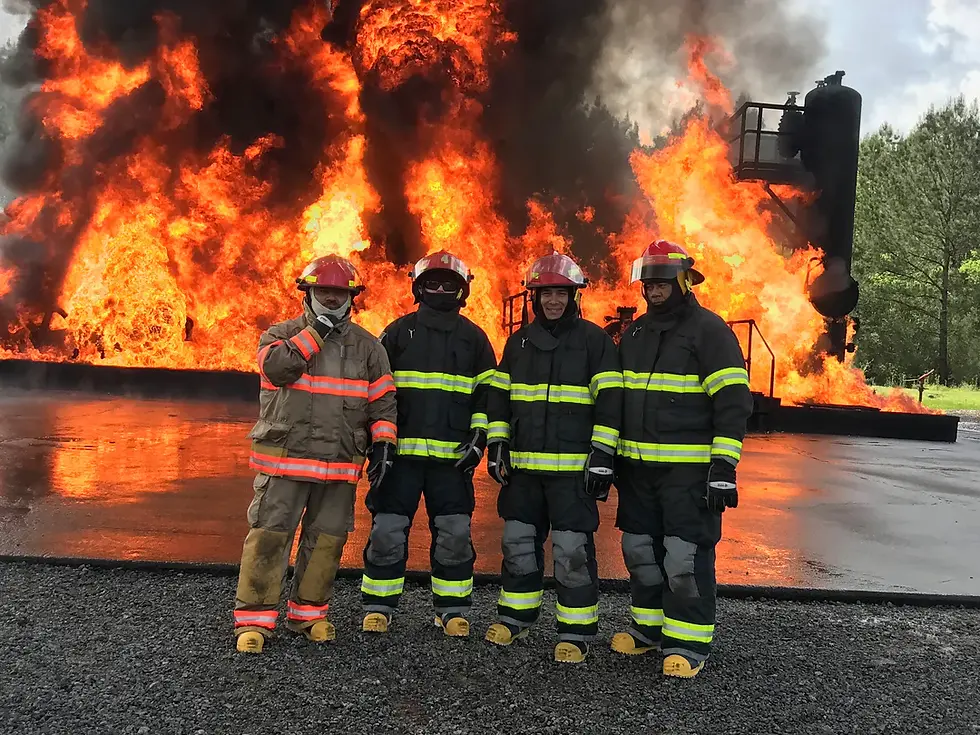
Live fire evolutions including (interior attack on room and contents fire, exterior defensive operations, ventilation coordination)
SCBA emergency procedures including (air-sharing techniques, zero-visibility maze navigation, emergency egress from entanglement)
Rescue operations including (victim search and removal, ladder rescue execution, rapid intervention team deployment)
Hose and equipment operations including (hose line advancement under fire conditions, nozzle control and stream application, forcible entry execution)
Theoritical Assessment
Technical quizzes on fire science and firefighting principles including (multiple-choice questions on NFPA 600 requirements, matching exercises for extinguishing agents and fire classes)
Equipment operation assessments including (SCBA donning proficiency tests, hose evolution competency checks, extinguisher operation demonstrations)
Tactical decision-making scenarios including (size-up evaluations, offensive versus defensive strategy selections, resource deployment planning)
Incident command exercises including (ICS organizational chart development, accountability system implementation, tactical priority sequencing)
Why Choose This Course
Comprehensive coverage of NFPA 600 and OSHA 29 CFR 1910.156 requirements
Extensive hands-on training with live fire evolutions and realistic scenarios
Alignment with internationally recognized firefighting standards and best practices
Focus on industrial fire scenarios and specialized hazards
Emergency medical integration for comprehensive emergency response capability
Note: This course outline, including specific topics, modules, and duration, can be customized based on the specific needs and requirements of the client.
Just Get In Touch Now, We Will Do The Rest!


.webp)
Recommended Courses

.webp)


Suggested Questions

.webp)
The training I received from Tamkene was truly exceptional.
Dalal AlSaeed

.webp)
Choosing Tamkene for our professional development was a game-changer.
Wafi AlZayer

.webp)
Tamkene delivered quality training with a strong focus on standards. The organization and delivery exceeded our expectations.
Saad AlMisehal
Testimonial