_edited.png)


ACCREDITATIONS


Clients


.webp)
.webp)
RESULTS-ORITNTED Training Description
Course Duration
1 Day
Training Delivery Method
Classroom (Instructor-Led) or Online (Instructor-Led)
Instructors Languages
English / Arabic / Urdu / Hindi / Pashto
Certification Provider
Tamkene Saudi Training Center - Approved by TVTC (Technical and Vocational Training Corporation)
Certificate Validity
2 Years (Extendable with additional training hours)
Course Average Passing Rate
98%
Competency Assessment Criteria
Practical Assessment and Knowledge Assessment
Post Training Reporting
Post Training Report(s) + Candidate(s) Training Evaluation Forms
Training Design Methodology
ADDIE Training Design Methodology
Certificate of Successful Completion
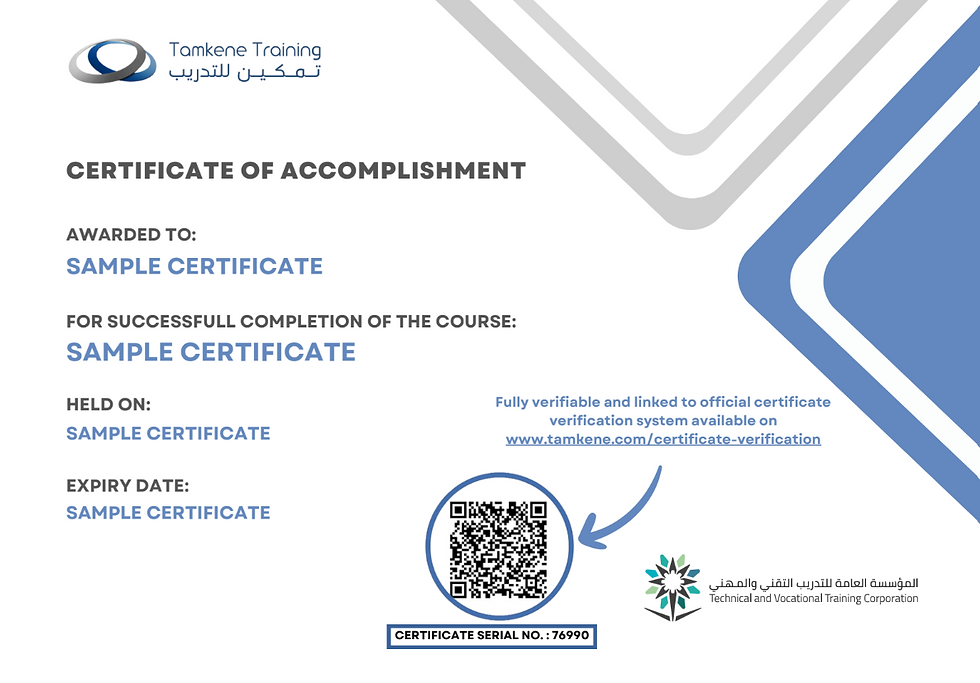
Certification is provided upon successful completion. The certificate can be verified through a QR-Code system.
Course Overview
This comprehensive Hazardous Materials Transport training course equips participants with essential knowledge and practical skills required for shipping hazardous materials safely, complying with transportation regulations, and preventing incidents during hazmat transportation. The course covers fundamental hazardous materials regulations along with practical techniques for material classification, packaging selection, marking and labeling, documentation preparation, and emergency response to enable shippers, carriers, and handlers to identify regulated materials, prepare shipments properly, complete shipping papers accurately, and respond to transportation emergencies appropriately.
Participants will learn to apply proven methodologies including DOT Hazardous Materials Regulations (49 CFR), Hazard Classification systems, Packaging Group determination, Proper Shipping Name selection, Labeling and Placarding requirements, and Emergency Response procedures to classify hazardous materials, select appropriate packaging, apply correct markings and labels, prepare compliant shipping documentation, and respond to transportation incidents. This course combines theoretical concepts with practical applications and real-world case studies to ensure participants gain valuable skills applicable to their professional environment while emphasizing regulatory compliance, public safety, environmental protection, and professional responsibility.
Key Learning Objectives
Understand DOT hazardous materials regulations and requirements
Classify hazardous materials using the Hazardous Materials Table
Determine proper shipping names and identification numbers
Select appropriate packaging and packaging groups
Apply correct markings, labels, and placards to shipments
Prepare compliant hazardous materials shipping papers
Implement security and safety requirements for hazmat transport
Respond appropriately to hazardous materials transportation incidents
Course Outline
1. Introduction to Hazardous Materials Transportation
Hazardous materials definition including (materials posing unreasonable risk, DOT regulated substances)
Transportation hazards including (fire, explosion, toxicity, corrosion, environmental damage, health effects)
Regulatory framework including (49 CFR Parts 171-180, DOT authority, PHMSA oversight, enforcement)
Who must comply including (shippers, carriers, freight forwarders, packaging manufacturers, training providers)
Penalties and enforcement including (civil penalties, criminal violations, compliance orders, training requirements)
2. Hazard Classes and Divisions
Nine hazard classes including (explosives, gases, flammable liquids, flammable solids, oxidizers, toxic/infectious, radioactive, corrosives, miscellaneous)
Class 1 Explosives including (divisions 1.1-1.6, mass explosion, projection, fire hazards)
Class 2 Gases including (flammable, non-flammable, toxic, compressed, liquefied, dissolved)
Class 3 Flammable Liquids including (flash point criteria, combustible liquids, packing groups)
Class 4, 5, 6 including (flammable solids, oxidizers, organic peroxides, toxic substances, infectious substances)
Class 7, 8, 9 including (radioactive materials, corrosives, miscellaneous dangerous goods)
3. Hazardous Materials Table and Classification
HMT structure including (columns 1-10, symbols, hazard class, packing group, labels, packaging)
Proper Shipping Name including (technical names, generic names, n.o.s. entries, basic descriptions)
UN/NA identification numbers including (four-digit numbers, North American codes, international codes)
Hazard class determination including (primary hazard, subsidiary hazards, precedence rules)
Packing Group assignment including (I high danger, II medium danger, III low danger, criteria)
4. Packaging Requirements and Selection
Packaging types including (combination packaging, single packaging, composite packaging, bulk packaging)
Packaging performance standards including (UN performance-oriented packaging, testing, marking)
Packaging groups including (PG I, PG II, PG III, compatibility, performance levels)
Packaging authorization including (Column 8 references, Part 173 specifications, exceptions)
Special provisions including (packaging exceptions, additional requirements, prohibitions)
5. Marking and Labeling Requirements
Package markings including (proper shipping name, UN number, shipper/consignee, specification marking)
Orientation arrows including (liquid package markings, combination packaging, proper orientation)
Hazard labels including (primary labels, subsidiary labels, size and placement, color coding)
Label application including (contrasting background, durability, visibility, proper placement)
Special markings including (limited quantities, ORM-D, marine pollutants, inhalation hazard)
6. Placarding Requirements for Transport Vehicles
Placarding regulations including (49 CFR 172 Subpart F, when required, placard tables, exceptions)
Placard selection including (Table 1 placards, Table 2 placards, 1,001 pound rule)
Placard placement including (four sides, visibility, size requirements, display standards)
Placard specifications including (dimensions, colors, text, symbols, durability)
Placard exceptions including (limited quantities, ORM-D, certain materials, small quantities)
7. Shipping Papers and Documentation
Shipping paper requirements including (basic description, technical name, emergency contact, certification)
Description sequence including (UN number, proper shipping name, hazard class, packing group)
Additional information including (total quantity, number/type packages, emergency contact number)
Shipping paper retention including (shipper 2 years, carrier 1 year, accessibility)
Special entries including (RQ reportable quantities, marine pollutants, limited quantities, poison inhalation)
8. Loading, Unloading, and Segregation
Loading requirements including (securing, blocking, bracing, damage prevention)
Segregation rules including (incompatible materials, separation distances, barriers)
Forbidden combinations including (explosives with certain materials, oxidizers with flammables, incompatibility chart)
Vehicle inspection including (pre-trip inspection, during transport, post-trip inspection)
Cargo securement including (proper restraint, load distribution, movement prevention)
9. Security Requirements and Security Plans
Security awareness including (threat recognition, suspicious activity, reporting procedures)
Security plan elements including (personnel security, unauthorized access prevention, en route security)
High-security materials including (explosives, radioactive materials, toxic inhalation hazards)
Driver training including (security awareness, verification procedures, incident reporting)
Cargo theft prevention including (vehicle security, parking restrictions, monitoring)
10. Emergency Response and Incident Reporting
Emergency Response Guidebook including (ERG structure, material identification, protective actions, initial response)
Incident response including (secure scene, call 911, identify material, protect people, contain if safe)
Incident reporting including (immediate notification, written reports, NRC notification, serious incidents)
Reportable quantities including (RQ designation, spill reporting, environmental notification)
Driver responsibilities including (scene safety, emergency services notification, information provision, staying on scene)
11. Case Studies & Group Discussions
Hazmat transportation incidents including (spills, releases, packaging failures, documentation violations)
Compliance success examples including (proper classification, compliant shipments, incident prevention)
Industry shipping scenarios including (chemical shipments, industrial materials, retail distribution, waste transport)
Lessons from hazmat accidents including (classification errors, packaging failures, labeling violations, inadequate documentation)
The importance of proper training in developing effective hazardous materials transport capabilities
1. Introduction to Hazardous Materials Transportation
Hazardous materials definition including (materials posing unreasonable risk, DOT regulated substances)
Transportation hazards including (fire, explosion, toxicity, corrosion, environmental damage, health effects)
Regulatory framework including (49 CFR Parts 171-180, DOT authority, PHMSA oversight, enforcement)
Who must comply including (shippers, carriers, freight forwarders, packaging manufacturers, training providers)
Penalties and enforcement including (civil penalties, criminal violations, compliance orders, training requirements)
2. Hazard Classes and Divisions
Nine hazard classes including (explosives, gases, flammable liquids, flammable solids, oxidizers, toxic/infectious, radioactive, corrosives, miscellaneous)
Class 1 Explosives including (divisions 1.1-1.6, mass explosion, projection, fire hazards)
Class 2 Gases including (flammable, non-flammable, toxic, compressed, liquefied, dissolved)
Class 3 Flammable Liquids including (flash point criteria, combustible liquids, packing groups)
Class 4, 5, 6 including (flammable solids, oxidizers, organic peroxides, toxic substances, infectious substances)
Class 7, 8, 9 including (radioactive materials, corrosives, miscellaneous dangerous goods)
3. Hazardous Materials Table and Classification
HMT structure including (columns 1-10, symbols, hazard class, packing group, labels, packaging)
Proper Shipping Name including (technical names, generic names, n.o.s. entries, basic descriptions)
UN/NA identification numbers including (four-digit numbers, North American codes, international codes)
Hazard class determination including (primary hazard, subsidiary hazards, precedence rules)
Packing Group assignment including (I high danger, II medium danger, III low danger, criteria)
4. Packaging Requirements and Selection
Packaging types including (combination packaging, single packaging, composite packaging, bulk packaging)
Packaging performance standards including (UN performance-oriented packaging, testing, marking)
Packaging groups including (PG I, PG II, PG III, compatibility, performance levels)
Packaging authorization including (Column 8 references, Part 173 specifications, exceptions)
Special provisions including (packaging exceptions, additional requirements, prohibitions)
5. Marking and Labeling Requirements
Package markings including (proper shipping name, UN number, shipper/consignee, specification marking)
Orientation arrows including (liquid package markings, combination packaging, proper orientation)
Hazard labels including (primary labels, subsidiary labels, size and placement, color coding)
Label application including (contrasting background, durability, visibility, proper placement)
Special markings including (limited quantities, ORM-D, marine pollutants, inhalation hazard)
6. Placarding Requirements for Transport Vehicles
Placarding regulations including (49 CFR 172 Subpart F, when required, placard tables, exceptions)
Placard selection including (Table 1 placards, Table 2 placards, 1,001 pound rule)
Placard placement including (four sides, visibility, size requirements, display standards)
Placard specifications including (dimensions, colors, text, symbols, durability)
Placard exceptions including (limited quantities, ORM-D, certain materials, small quantities)
7. Shipping Papers and Documentation
Shipping paper requirements including (basic description, technical name, emergency contact, certification)
Description sequence including (UN number, proper shipping name, hazard class, packing group)
Additional information including (total quantity, number/type packages, emergency contact number)
Shipping paper retention including (shipper 2 years, carrier 1 year, accessibility)
Special entries including (RQ reportable quantities, marine pollutants, limited quantities, poison inhalation)
8. Loading, Unloading, and Segregation
Loading requirements including (securing, blocking, bracing, damage prevention)
Segregation rules including (incompatible materials, separation distances, barriers)
Forbidden combinations including (explosives with certain materials, oxidizers with flammables, incompatibility chart)
Vehicle inspection including (pre-trip inspection, during transport, post-trip inspection)
Cargo securement including (proper restraint, load distribution, movement prevention)
9. Security Requirements and Security Plans
Security awareness including (threat recognition, suspicious activity, reporting procedures)
Security plan elements including (personnel security, unauthorized access prevention, en route security)
High-security materials including (explosives, radioactive materials, toxic inhalation hazards)
Driver training including (security awareness, verification procedures, incident reporting)
Cargo theft prevention including (vehicle security, parking restrictions, monitoring)
10. Emergency Response and Incident Reporting
Emergency Response Guidebook including (ERG structure, material identification, protective actions, initial response)
Incident response including (secure scene, call 911, identify material, protect people, contain if safe)
Incident reporting including (immediate notification, written reports, NRC notification, serious incidents)
Reportable quantities including (RQ designation, spill reporting, environmental notification)
Driver responsibilities including (scene safety, emergency services notification, information provision, staying on scene)
11. Case Studies & Group Discussions
Hazmat transportation incidents including (spills, releases, packaging failures, documentation violations)
Compliance success examples including (proper classification, compliant shipments, incident prevention)
Industry shipping scenarios including (chemical shipments, industrial materials, retail distribution, waste transport)
Lessons from hazmat accidents including (classification errors, packaging failures, labeling violations, inadequate documentation)
The importance of proper training in developing effective hazardous materials transport capabilities
Group Exercises
Classification practice including (using Hazardous Materials Table, determining proper shipping name, identifying UN number, assigning packing group)
Shipping paper preparation including (creating compliant shipping documents, sequencing information correctly, including all required elements)
Gained Core Technical Skills
Upon successful completion of this course, participants will have gained the following core technical skills:
DOT regulations including (49 CFR Parts 171-180, regulatory structure, compliance requirements, enforcement)
Hazard classification including (nine hazard classes, divisions, primary and subsidiary hazards, precedence)
Hazardous Materials Table including (HMT navigation, column interpretation, information extraction, application)
Proper shipping names including (selection, technical names, n.o.s. entries, basic descriptions)
Packaging requirements including (packaging types, performance standards, packing groups, selection)
Marking and labeling including (package markings, hazard labels, orientation arrows, special markings)
Placarding including (placard requirements, selection, placement, specifications, exceptions)
Shipping papers including (required information, proper sequence, additional entries, retention)
Segregation including (incompatibility, separation requirements, loading restrictions)
Emergency response including (ERG use, incident reporting, notification requirements, driver responsibilities)
Services Geographical Coverage
Targeted Audience
Shippers preparing hazardous materials for transport
Shipping and Receiving Personnel handling hazmat
Warehouse Staff loading and unloading hazmat
Transportation Coordinators arranging hazmat shipments
Drivers transporting hazardous materials
Freight Forwarders managing hazmat logistics
Safety Personnel overseeing hazmat compliance
Packaging Personnel preparing hazmat packages
Practical Assessment
Hazmat shipment preparation demonstration including (classifying material, selecting proper shipping name and UN number, determining packaging requirements, applying markings and labels correctly)
Shipping documentation completion including (preparing compliant shipping paper, including all required information, proper sequence, emergency contact, shipper certification)
Knowledge Assessment
Technical quizzes on hazmat transport concepts including (multiple-choice questions on hazard classes, packaging requirements, marking and labeling)
Scenario-based assessments including (classifying materials, selecting packaging, determining placarding, preparing shipping papers)
Regulation application exercises including (using 49 CFR, applying HMT, determining compliance, identifying violations)
Documentation evaluation including (reviewing shipping papers, identifying errors, ensuring completeness, verifying accuracy)
Why Choose This Course
Comprehensive coverage of hazardous materials transport from classification to emergency response
Integration of DOT 49 CFR regulations and compliance requirements
Focus on practical application through classification and documentation exercises
Development of both regulatory knowledge and operational competencies
Emphasis on proper classification and compliant documentation
Exposure to diverse hazmat shipping scenarios and requirements
Enhancement of ERG use and emergency response skills
Building of comprehensive hazmat transport competencies for regulatory compliance and public safety
Note: This course outline, including specific topics, modules, and duration, can be customized based on the specific needs and requirements of the client.


.jpg)
Recommended Courses

.png)

Suggested Questions

.png)
The training I received from Tamkene was truly exceptional.
Dalal AlSaeed

.png)
Choosing Tamkene for our professional development was a game-changer.
Wafi AlZayer

.png)
Tamkene delivered quality training with a strong focus on standards. The organization and delivery exceeded our expectations.
Saad AlMisehal
Testimonial