_edited.png)


ACCREDITATIONS


Clients


.webp)
.webp)
RESULTS-ORITNTED Training Description
Course Duration
1 Day
Training Delivery Method
Classroom (Instructor-Led) or Online (Instructor-Led)
Instructors Languages
English / Arabic / Urdu / Hindi / Pashto
Certification Provider
Tamkene Saudi Training Center - Approved by TVTC (Technical and Vocational Training Corporation)
Certificate Validity
2 Years (Extendable with additional training hours)
Course Average Passing Rate
98%
Competency Assessment Criteria
Practical Assessment and Knowledge Assessment
Post Training Reporting
Post Training Report(s) + Candidate(s) Training Evaluation Forms
Training Design Methodology
ADDIE Training Design Methodology
Certificate of Successful Completion
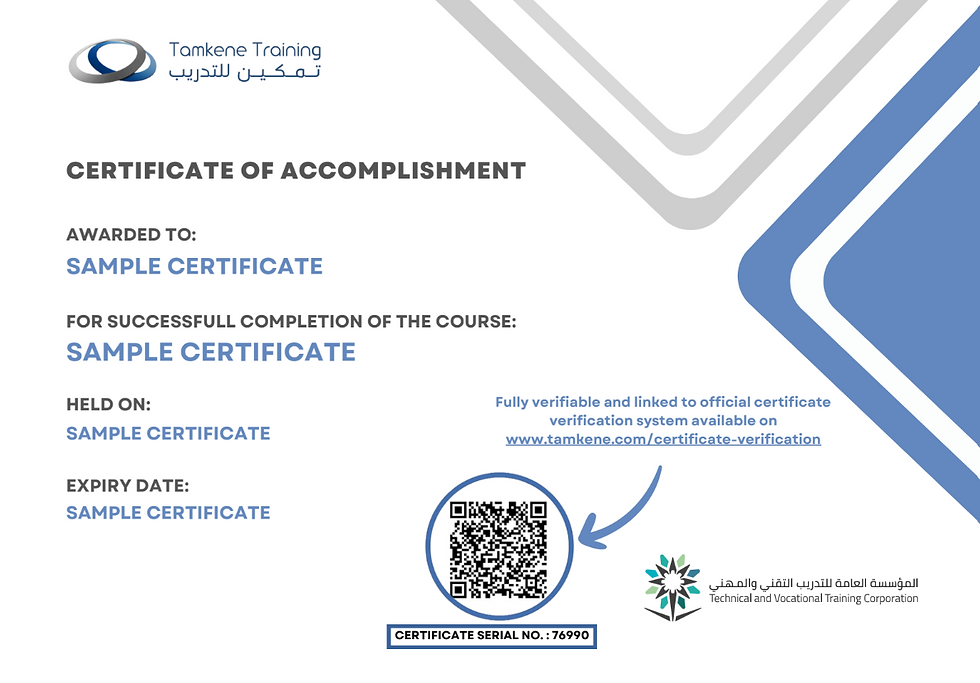
Certification is provided upon successful completion. The certificate can be verified through a QR-Code system.
Course Overview
This comprehensive Heavy Equipment Supervision training course equips participants with essential knowledge and practical skills required for supervising heavy equipment operations, managing equipment safety, and coordinating construction or industrial sites effectively. The course covers fundamental supervision principles along with practical techniques for equipment oversight, operator evaluation, hazard management, site coordination, and regulatory compliance to enable supervisors to ensure safe operations, optimize equipment productivity, and maintain operational excellence.
Participants will learn to apply proven methodologies including Safety Management Systems, Risk Assessment procedures, Pre-Operation Inspection protocols, Operator Competency evaluation, Site Coordination techniques, and Incident Investigation methods to supervise equipment operations safely, evaluate operator performance, identify hazards, implement control measures, coordinate multiple equipment, and ensure regulatory compliance. This course combines theoretical concepts with practical applications and real-world case studies to ensure participants gain valuable skills applicable to their professional environment while emphasizing safety leadership, operational efficiency, effective communication, and accountability.
Key Learning Objectives
Understand heavy equipment supervision responsibilities and requirements
Evaluate operator competency and performance effectively
Conduct equipment inspections and verify readiness
Identify and control equipment-related hazards
Coordinate multiple equipment operations on site
Implement safety protocols and emergency procedures
Investigate incidents and implement corrective actions
Ensure compliance with safety regulations and standards
Course Outline
1. Introduction to Heavy Equipment Supervision
Supervisor role and responsibilities including (safety oversight, productivity management, regulatory compliance)
Heavy equipment types including (excavators, loaders, dozers, cranes, forklifts, aerial lifts)
Supervision importance including (accident prevention, efficiency optimization, quality assurance)
Regulatory framework including (OSHA standards, industry regulations, manufacturer guidelines, local requirements)
Supervisor competencies including (technical knowledge, safety awareness, communication skills, leadership abilities)
2. Equipment Safety Regulations and Standards
OSHA equipment standards including (general industry, construction, operator requirements, inspection standards)
Equipment-specific regulations including (powered industrial trucks, cranes, aerial lifts, earthmoving equipment)
Certification and training requirements including (operator qualification, competency evaluation, documentation)
Manufacturer requirements including (operating manuals, capacity ratings, maintenance specifications, safety features)
Legal responsibilities including (supervisor liability, employer obligations, due diligence, duty of care)
3. Operator Competency and Performance Evaluation
Operator qualification requirements including (training, evaluation, certification, authorization)
Competency assessment including (knowledge testing, skill demonstration, performance observation)
Performance evaluation criteria including (safe operation, productivity, equipment care, communication)
Ongoing monitoring including (observation, feedback, retraining needs, performance documentation)
Addressing deficiencies including (retraining, remedial action, authorization suspension, progressive discipline)
4. Pre-Operation Inspection and Equipment Readiness
Pre-operation inspection requirements including (daily checks, operator responsibility, supervisor verification)
Inspection components including (safety devices, controls, hydraulics, tires, structural integrity)
Defect identification including (damage recognition, wear assessment, malfunction detection)
Out-of-service criteria including (critical defects, safety hazards, lockout procedures, repair requirements)
Documentation review including (inspection logs, maintenance records, defect reports, repair verification)
5. Site Safety Planning and Hazard Management
Site assessment including (ground conditions, overhead hazards, underground utilities, environmental factors)
Hazard identification including (struck-by, caught-between, electrocution, fall hazards, visibility issues)
Risk assessment including (likelihood evaluation, severity determination, risk prioritization, control selection)
Control measures including (engineering controls, administrative controls, PPE, exclusion zones)
Site preparation including (ground stabilization, utility location, traffic control, barrier placement)
6. Equipment Operations Oversight and Coordination
Operation supervision including (work observation, hazard monitoring, instruction provision, intervention)
Safe work practices including (load limits, stability requirements, travel paths, spotters)
Multiple equipment coordination including (work sequencing, spacing requirements, communication protocols, conflict prevention)
Visibility and blind spots including (spotter use, camera systems, communication methods, proximity awareness)
Environmental conditions including (weather impacts, lighting, ground conditions, operating restrictions)
7. Communication and Emergency Response
Communication methods including (hand signals, two-way radio, visual signals, verbal communication)
Standard hand signals including (lift operations, equipment movements, stop signals, emergency signals)
Spotter requirements including (training, visibility, positioning, signal authority)
Emergency scenarios including (equipment failure, tip-over, struck-by, caught-between, medical emergency)
Incident investigation including (root cause analysis, witness interviews, corrective actions, reporting)
8. Load Management, Traffic Control, and Site-Specific Considerations
Load capacity including (rated capacity, load charts, derating factors, stability triangle)
Stability factors including (ground conditions, slope, outriggers, counterweights, load dynamics)
Traffic management including (vehicle routes, pedestrian routes, segregation, signage, exclusion zones)
Environmental protection including (spill prevention, erosion control, dust management, noise control)
Special hazards including (underground utilities, overhead power lines, confined areas, unstable ground)
9. Case Studies & Group Discussions
Heavy equipment incidents including (tip-overs, struck-by accidents, electrocutions, caught-between)
Supervision success examples including (hazard prevention, effective coordination, safety culture)
Industry-specific scenarios including (construction sites, industrial facilities, mining operations, material handling)
Lessons from supervisory failures including (inadequate oversight, poor communication, training gaps)
The importance of proper training in developing effective heavy equipment supervision capabilities
1. Introduction to Heavy Equipment Supervision
Supervisor role and responsibilities including (safety oversight, productivity management, regulatory compliance)
Heavy equipment types including (excavators, loaders, dozers, cranes, forklifts, aerial lifts)
Supervision importance including (accident prevention, efficiency optimization, quality assurance)
Regulatory framework including (OSHA standards, industry regulations, manufacturer guidelines, local requirements)
Supervisor competencies including (technical knowledge, safety awareness, communication skills, leadership abilities)
2. Equipment Safety Regulations and Standards
OSHA equipment standards including (general industry, construction, operator requirements, inspection standards)
Equipment-specific regulations including (powered industrial trucks, cranes, aerial lifts, earthmoving equipment)
Certification and training requirements including (operator qualification, competency evaluation, documentation)
Manufacturer requirements including (operating manuals, capacity ratings, maintenance specifications, safety features)
Legal responsibilities including (supervisor liability, employer obligations, due diligence, duty of care)
3. Operator Competency and Performance Evaluation
Operator qualification requirements including (training, evaluation, certification, authorization)
Competency assessment including (knowledge testing, skill demonstration, performance observation)
Performance evaluation criteria including (safe operation, productivity, equipment care, communication)
Ongoing monitoring including (observation, feedback, retraining needs, performance documentation)
Addressing deficiencies including (retraining, remedial action, authorization suspension, progressive discipline)
4. Pre-Operation Inspection and Equipment Readiness
Pre-operation inspection requirements including (daily checks, operator responsibility, supervisor verification)
Inspection components including (safety devices, controls, hydraulics, tires, structural integrity)
Defect identification including (damage recognition, wear assessment, malfunction detection)
Out-of-service criteria including (critical defects, safety hazards, lockout procedures, repair requirements)
Documentation review including (inspection logs, maintenance records, defect reports, repair verification)
5. Site Safety Planning and Hazard Management
Site assessment including (ground conditions, overhead hazards, underground utilities, environmental factors)
Hazard identification including (struck-by, caught-between, electrocution, fall hazards, visibility issues)
Risk assessment including (likelihood evaluation, severity determination, risk prioritization, control selection)
Control measures including (engineering controls, administrative controls, PPE, exclusion zones)
Site preparation including (ground stabilization, utility location, traffic control, barrier placement)
6. Equipment Operations Oversight and Coordination
Operation supervision including (work observation, hazard monitoring, instruction provision, intervention)
Safe work practices including (load limits, stability requirements, travel paths, spotters)
Multiple equipment coordination including (work sequencing, spacing requirements, communication protocols, conflict prevention)
Visibility and blind spots including (spotter use, camera systems, communication methods, proximity awareness)
Environmental conditions including (weather impacts, lighting, ground conditions, operating restrictions)
7. Communication and Emergency Response
Communication methods including (hand signals, two-way radio, visual signals, verbal communication)
Standard hand signals including (lift operations, equipment movements, stop signals, emergency signals)
Spotter requirements including (training, visibility, positioning, signal authority)
Emergency scenarios including (equipment failure, tip-over, struck-by, caught-between, medical emergency)
Incident investigation including (root cause analysis, witness interviews, corrective actions, reporting)
8. Load Management, Traffic Control, and Site-Specific Considerations
Load capacity including (rated capacity, load charts, derating factors, stability triangle)
Stability factors including (ground conditions, slope, outriggers, counterweights, load dynamics)
Traffic management including (vehicle routes, pedestrian routes, segregation, signage, exclusion zones)
Environmental protection including (spill prevention, erosion control, dust management, noise control)
Special hazards including (underground utilities, overhead power lines, confined areas, unstable ground)
9. Case Studies & Group Discussions
Heavy equipment incidents including (tip-overs, struck-by accidents, electrocutions, caught-between)
Supervision success examples including (hazard prevention, effective coordination, safety culture)
Industry-specific scenarios including (construction sites, industrial facilities, mining operations, material handling)
Lessons from supervisory failures including (inadequate oversight, poor communication, training gaps)
The importance of proper training in developing effective heavy equipment supervision capabilities
Group Exercises
Hazard identification exercise including (analyzing site photos or scenarios, identifying equipment hazards, recommending controls)
Incident investigation practice including (reviewing incident scenario, conducting root cause analysis, developing corrective actions)
Gained Core Technical Skills
Upon successful completion of this course, participants will have gained the following core technical skills:
Supervision responsibilities including (safety oversight, operator evaluation, site coordination, regulatory compliance)
Operator competency evaluation including (qualification assessment, performance monitoring, deficiency identification)
Equipment inspection oversight including (pre-operation verification, defect recognition, out-of-service determination)
Hazard identification including (equipment hazards, site hazards, environmental hazards, struck-by and caught-between)
Risk assessment including (likelihood evaluation, severity determination, control selection, risk mitigation)
Site coordination including (multiple equipment management, traffic control, exclusion zones, ground personnel protection)
Communication protocols including (hand signals, radio procedures, spotter coordination, emergency communication)
Load management including (capacity verification, stability assessment, lift planning, overload prevention)
Emergency response including (incident management, emergency procedures, scene control, investigation)
Regulatory compliance including (OSHA standards, equipment regulations, documentation requirements, legal responsibilities)
Services Geographical Coverage
In Tamkene Training Center or at our client's facility (On-Site), Covering All Saudi Arabia Cities and Locations:
Targeted Audience
Construction Supervisors overseeing equipment operations
Site Foremen coordinating heavy equipment
Safety Supervisors managing equipment safety
Operations Managers responsible for equipment
Project Managers coordinating construction sites
Maintenance Supervisors overseeing equipment programs
Warehouse Supervisors managing material handling equipment
Industrial Supervisors coordinating equipment operations
Practical Assessment
Site supervision demonstration including (conducting site assessment, identifying hazards, implementing controls, coordinating operations, providing operator guidance)
Incident response simulation including (managing emergency scenario, implementing emergency procedures, conducting preliminary investigation, documenting incident)
Knowledge Assessment
Technical quizzes on supervision concepts including (multiple-choice questions on regulations, matching exercise for hazard types, scenario identification)
Scenario-based assessments including (analyzing supervision situations, making safety decisions, addressing operational challenges)
Regulatory compliance exercises including (identifying OSHA requirements, ensuring standard adherence, implementing protocols)
Performance evaluation practice including (assessing operator competency scenarios, determining qualification, recommending actions)
Why Choose This Course
Comprehensive coverage of heavy equipment supervision from fundamentals to advanced coordination
Integration of OSHA standards and industry best practices
Focus on practical application through scenario analysis and simulations
Development of both technical knowledge and leadership competencies
Emphasis on hazard recognition and risk management
Exposure to diverse equipment types and operational scenarios
Enhancement of communication and coordination capabilities
Building of comprehensive supervision competencies for safe and efficient heavy equipment operations
Note: This course outline, including specific topics, modules, and duration, can be customized based on the specific needs and requirements of the client.


.webp)
Recommended Courses

.png)

Suggested Questions

.png)
The training I received from Tamkene was truly exceptional.
Dalal AlSaeed

.png)
Choosing Tamkene for our professional development was a game-changer.
Wafi AlZayer

.png)
Tamkene delivered quality training with a strong focus on standards. The organization and delivery exceeded our expectations.
Saad AlMisehal
Testimonial