_edited.png)


ACCREDITATIONS


Clients


.webp)
.webp)
RESULTS-ORITNTED Training Description
Course Duration
2 Days
Training Delivery Method
Classroom (Instructor-Led)
Instructors Languages
English / Arabic / Urdu / Hindi / Pashto
Certification Provider
Tamkene Saudi Training Center - Approved by TVTC (Technical and Vocational Training Corporation)
Certificate Validity
2 Years (Extendable with additional training hours)
Course Average Passing Rate
97%
Competency Assessment Criteria
Practical Assessment and Knowledge Assessment
Post Training Reporting
Post Training Report + Candidate(s) Training Evaluation Forms
Training Design Methodology
ADDIE Training Design Methodology
Certificate of Successful Completion
Certification is provided upon successful completion. The certificate can be verified through a QR-Code system.
Course Overview
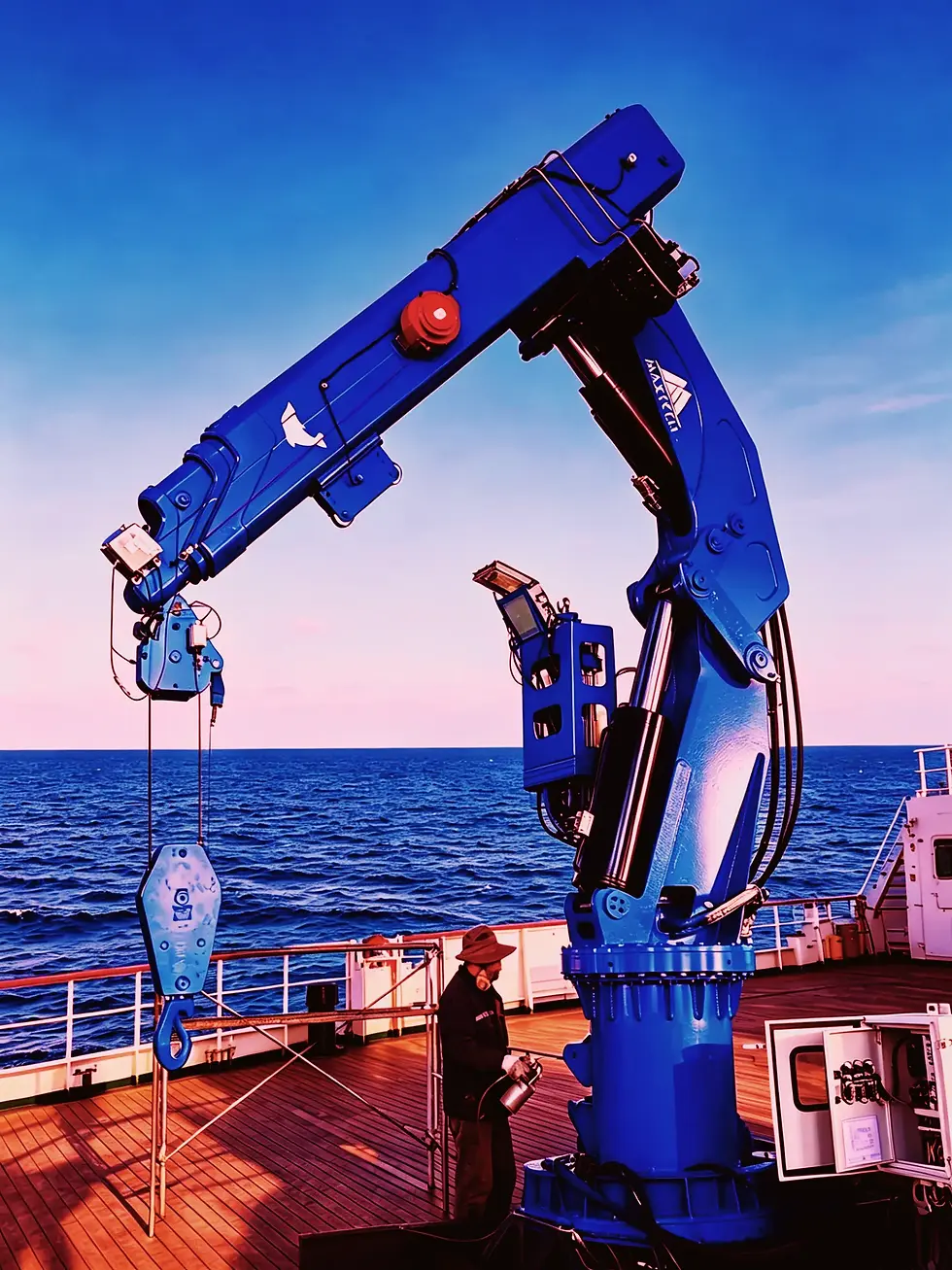
Pedestal-mounted knuckle boom cranes are among the most technically demanding lifting systems in fixed industrial, offshore, and port environments. Unlike mobile cranes that can be repositioned, a pedestal-mounted crane operates from a fixed structural base — placing the full burden of lift planning, load management, and hazard control on the operator's knowledge and judgment. The articulating knuckle boom configuration adds further complexity, with progressive capacity changes across multiple boom angles and extension combinations that demand precise interpretation and meticulous pre-lift planning.
This training course is designed to develop fully competent pedestal-mounted knuckle boom crane operators capable of performing lifting operations safely, efficiently, and in strict compliance with internationally recognized standards including ASME B30.22: Articulating Boom Cranes, which governs the construction, installation, operation, inspection, and maintenance of knuckle boom cranes on both mobile chassis and stationary installations, API Specification 2C: Offshore Pedestal-Mounted Cranes, and API RP 2D: Recommended Practice for Operation and Maintenance of Offshore Cranes. Rigging hardware requirements are addressed in accordance with ASME B30.26: Rigging Hardware. Participants will develop competency across all aspects of crane operation including component identification, pre-use inspection, load chart interpretation, lift planning, signal communication, and emergency response — all reinforced through structured practical exercises under supervision. The course applies Lift Planning and Risk Assessment (LPRA) methodology throughout, ensuring every participant approaches lifting operations with the systematic discipline that fixed crane environments demand.
Key Learning Objectives
Identify pedestal-mounted knuckle boom crane configurations, structural components, hydraulic systems, and control functions
Conduct comprehensive pre-use inspections in accordance with ASME B30.22 and API RP 2D requirements
Interpret load charts and capacity tables for articulating boom configurations including capacity variation by boom angle, extension, and slew position
Apply Lift Planning and Risk Assessment (LPRA) methodology to classify, plan, and authorize routine, critical, and engineered lifts
Execute pedestal-mounted crane operations safely under supervision including knuckle boom articulation, slewing, hoisting, and load placement
Apply rigging principles in accordance with ASME B30.26 and communicate effectively with signal persons during all lift operations
Identify and manage operational hazards specific to fixed pedestal crane environments including structural load paths, exclusion zone management, and adjacent equipment conflicts
Apply API Spec 2C and API RP 2D requirements to offshore or fixed platform pedestal crane operation and maintenance
Respond correctly to crane emergencies including overload conditions, hydraulic failure during a lift, and two-blocking events
Integrate HSE and quality management principles into pedestal crane operations and maintain compliance documentation
Course Outline
1. Introduction to Pedestal-Mounted Knuckle Boom Crane Operations
Overview of pedestal-mounted knuckle boom cranes and their operational applications including (fixed industrial facility material handling, port and terminal cargo handling, offshore platform supply and deck operations, and petrochemical plant maintenance lifting)
Distinction between pedestal-mounted and mobile crane configurations including (fixed base structural load transfer, absence of outrigger deployment requirements, slew ring load path to pedestal foundation, and capacity independence from ground bearing conditions)
Applicable international standards and regulatory requirements including (ASME B30.22: Articulating Boom Cranes, API Specification 2C: Offshore Pedestal-Mounted Cranes, API RP 2D: Recommended Practice for Operation and Maintenance of Offshore Cranes, ASME B30.26: Rigging Hardware, and local lifting authority requirements)
Operator roles, qualifications, and responsibilities including (operator authorization requirements, duty of care during lifting operations, and responsibilities under applicable regulatory frameworks)
Overview of pedestal crane incidents and primary causes including (overload events from load chart misinterpretation, two-blocking during boom extension, structural failures from pedestal base fatigue, and rigging failures during multi-leg lift operations)
2. Crane Configuration, Structural Components, and Systems
2.1 Structural and Mechanical Components
Pedestal base and foundation structure including (pedestal column design, slewing ring mounting, structural load path to foundation, and platform or deck integration requirements)
Rotating superstructure and boom system including (turntable assembly, inner boom — first knuckle, outer boom — second knuckle, hydraulic extension sections, hook block, and load hoist drum where fitted)
Slewing system components and their operational significance including (slewing motor, slewing gearbox, slewing brake, slew ring bearing, and slew angle limiter systems)
Knuckle joint mechanics and their influence on crane capacity including (inner boom elevation cylinder, outer boom — knuckle — articulation cylinder, extension section hydraulic rams, and the progressive capacity reduction with increasing reach and knuckle angle)
2.2 Hydraulic, Control, and Safety Systems
Hydraulic power unit and circuit design including (pump types, directional control valves, pressure relief valve settings, hydraulic accumulator function, and hydraulic oil cooling requirements in high-ambient-temperature operating environments)
Operator control systems including (cab-mounted control levers, remote radio control pendant, proportional control systems for precise load positioning, and emergency stop functions)
Safety devices and their critical operational roles including (load moment indicator — LMI, overload cut-off system, anti-two-block — ATB device, slew angle limiter, hoist drum overwind protection, and boom angle indicator)
Load hoist system components where fitted including (main hoist drum, auxiliary hoist, wire rope reeving configuration, sheave block assembly, hook block, and hook latch function)
3. Pre-Use Inspection and Equipment Serviceability
3.1 Inspection Requirements and Structural Checks
Inspection categories and frequencies in accordance with ASME B30.22 and API RP 2D including (daily pre-shift operator inspections, monthly periodic inspections, annual comprehensive inspections, and post-incident inspections)
Structural inspection checkpoints including (boom section condition and paint coating integrity, knuckle joint pin and bush condition, slewing ring play assessment, pedestal column weld and structural integrity, and load hoist wire rope condition evaluation)
Wire rope inspection criteria in accordance with ASME B30.26 including (broken wire count per lay length, corrosion and wear assessment, kink, birdcage, and core protrusion detection, and end termination and thimble condition)
3.2 Hydraulic, Safety Device, and Documentation Checks
Hydraulic system inspection including (hydraulic fluid level and contamination check, hose and fitting condition, cylinder seal integrity, hydraulic drift test under load, and accumulator pre-charge pressure verification)
Safety device functional testing including (LMI calibration check and test lift verification, ATB device activation test, slew limiter function confirmation, overload cut-off test, and emergency stop response verification)
Rigging hardware inspection in accordance with ASME B30.26 including (sling type and condition assessment, shackle pin security and marking verification, hook latch function test, and rejection criteria for worn, damaged, or unmarked rigging components)
Inspection documentation requirements in accordance with API RP 2D including (completing pre-shift inspection records, periodic inspection reports, defect tagging and withdrawal procedures, and maintaining inspection history files)
4. Load Charts, Capacity, and Stability Principles
4.1 Load Chart Interpretation
Load chart structure for pedestal-mounted knuckle boom cranes including (capacity tables by inner boom angle, outer boom — knuckle — angle, extension length, and working radius — and the combined effect of multiple configuration variables on rated capacity)
Onboard versus offboard capacity distinctions in offshore and fixed platform applications including (reduced capacity for lifts off the platform or vessel, dynamic load factors for offshore environments, and capacity derating for suspended personnel operations where applicable)
Capacity reduction factors and their correct application including (wind speed derating, dynamic amplification factors in marine environments, reeving efficiency factors, and crane duty classification effects on rated capacity)
Load chart interpretation exercise including (working through multiple configuration scenarios, identifying the most restrictive capacity-limiting factor, and confirming that planned lifts fall within rated capacity with adequate safety margin)
4.2 Load Weight Verification and Stability
Load weight verification methods and their importance including (using certified weight documents, calculating load weight from material density and volume, using load cells for unverified loads, and the consequences of lifting unverified or misdeclared load weights)
Centre of gravity determination for single and multi-component loads including (estimating CoG for regular and irregular load shapes, identifying off-centre CoG loads and their effect on rigging arrangement, and managing load tilt during lift operations)
Structural load path from hook to pedestal foundation including (understanding how crane loading transfers through boom, slewing ring, pedestal column, and foundation — and the importance of pedestal and foundation integrity for crane stability)
5. Lift Planning and Risk Assessment
5.1 Lift Classification and Plan Development
Application of Lift Planning and Risk Assessment (LPRA) methodology to pedestal crane operations including (lift classification — routine, critical, and engineered — risk identification specific to fixed crane environments, and lift plan documentation requirements)
Critical lift plan development for pedestal-mounted crane operations including (load weight and CoG determination, boom configuration selection and capacity verification, working radius and slew angle confirmation, exclusion zone sizing, and pre-lift team briefing conduct)
Engineered lift plan requirements including (structural engineer sign-off for loads approaching rated capacity, multi-crane lift coordination plans, tandem lift procedures, and non-routine load geometry assessment)
Lift plan review and authorization requirements including (competent person sign-off obligations, permit-to-work integration, pre-lift meeting agenda, and toolbox talk content for critical and engineered lifts)
5.2 Hazard Identification and Proximity Management
Hazard identification specific to pedestal-mounted crane operations including (fixed slew arc limitations, adjacent structure and equipment conflicts within the slew radius, overhead obstruction assessment, and wind speed and direction effects on suspended load management)
Exclusion zone establishment and personnel management during lift operations including (slew radius exclusion zone demarcation, dropped object exclusion zone sizing below the load path, and personnel accountability procedures during critical lifts)
Managing lifts in congested or restricted environments including (blind lift procedures and signal person requirements, load passing over occupied areas, and coordination with adjacent work activities during lift operations)
6. Safe Pedestal Crane Operation
6.1 Pre-Lift Setup and Load Pick-Up
Pre-lift checks and LMI configuration including (entering load weight and reeving configuration into LMI, confirming working radius against load chart, verifying slew arc clearance, and conducting pre-lift communication with signal person and rigging crew)
Load pick-up procedures under supervision including (taking up slack slowly to confirm rigging integrity before full lift, monitoring LMI reading at lift-off, confirming load is level before proceeding, and pausing at low height to verify load stability before continuing)
Managing dynamic load effects during pick-up including (controlling hoist acceleration to minimize load swing, managing load pendulum in wind conditions, and applying tag lines for load directional control during pick-up in confined environments)
6.2 Slewing, Boom Articulation, and Load Placement
Slewing operations and load swing management including (controlled slew speed to prevent load pendulum, monitoring LMI during slew as radius changes, respecting slew angle limits, and stopping slew smoothly to avoid load oscillation)
Knuckle boom articulation during load handling under supervision including (coordinating inner boom elevation, outer boom knuckle angle, and extension simultaneously, managing capacity changes during multi-joint movement, and maintaining load height during boom reconfiguration)
Precision load placement techniques including (final approach speed reduction for delicate placement, using hydraulic proportional control for millimeter-precision positioning, managing load clearances in confined placement areas, and confirming load is safely set before releasing rigging)
Post-operation procedures including (stowing the boom in the designated rest position, securing the hook block, applying the slewing brake, shutting down the hydraulic system, and completing post-operation inspection and lifting records)
7. Rigging, Signal Communication, and Tag Line Management
Rigging fundamentals for pedestal crane operations in accordance with ASME B30.26 including (sling type selection and rated working load limits, sling angle effects on leg load — with reference to the de-rating table — shackle selection and pin torque requirements, and hook attachment and mousing procedures)
Multi-leg sling arrangement design including (equalizing beam use for load balance, managing unequal leg lengths and their effect on load tilt, and determining the correct number and arrangement of sling legs for asymmetric load geometries)
Signal person qualifications and responsibilities in accordance with ASME B30.22 including (standard hand signals for articulating boom crane operations, radio communication protocols, signal confirmation procedures, and the unconditional stop signal authority)
Tag line selection and management during lift operations including (tag line length and material selection, correct positioning of tag line handlers relative to the load path, and managing tag lines during slewing and placement in confined spaces)
Rigging inspection and rejection criteria in accordance with ASME B30.26 including (pre-use check requirements, rejection criteria for synthetic and wire rope slings, and documentation of rigging hardware inspection and service history)
8. Emergency Procedures and Incident Response
LMI overload alarm response procedures including (immediate hoist stop, avoiding further boom extension or radius increase, assessing options for safe load reduction, and communicating with the lift supervisor before any corrective action)
Anti-two-block device activation response including (immediate hoist stop upon ATB activation, assessing boom and rope geometry before resuming operation, and reporting ATB activation to the maintenance team for root cause assessment)
Hydraulic failure during an active lift including (maintaining load in position using brake application, notifying the lift supervisor and maintenance immediately, planning controlled emergency load lowering, and isolating the hydraulic system after load is safely set down)
Load swing emergency management including (ceasing slewing and boom movement immediately, allowing load to dampen naturally without attempting to hold it with boom movement, using tag lines to arrest pendulum where personnel are safely positioned to do so)
Post-incident actions and reporting including (securing the crane and load without additional risk, preserving the scene for investigation, notifying supervision and HSE, completing incident documentation, and participating in root cause investigation)
9. HSE Integration in Pedestal Crane Operations
9.1 Permit to Work and Process Safety
Integration of crane lifting operations within permit-to-work systems including (lift permit issuance, simultaneous operations — SIMOPS — conflict management, and permit suspension and reinstatement procedures during adjacent high-hazard work)
Process safety considerations in fixed facility crane operations including (lifting over live process equipment, managing ignition sources during crane operation in hazardous areas, and crane operation restrictions during high wind, lightning risk, and other adverse weather conditions)
Dropped object prevention in fixed crane operations including (load securing requirements during transit, tool and equipment tethering on the crane, anti-drop precautions on the hook block and rigging hardware, and dropped object exclusion zone management)
Fatigue management for crane operators including (shift length limitations, rest period requirements, fitness-for-duty assessment, and the cognitive impact of fatigue on crane operator judgment and reaction time during critical lifts)
9.2 Environmental and Regulatory Compliance
Environmental considerations in pedestal crane operations including (hydraulic fluid spill prevention and containment during maintenance, waste oil and filter disposal compliance, and noise management during crane operation in proximity to personnel work areas)
Regulatory compliance and documentation management including (operator authorization records, pre-use and periodic inspection documentation, lift plan filing, rigging hardware inspection logs, and third-party crane inspection certificate management in accordance with API RP 2D)
Regulatory authority inspection readiness including (maintaining document control for crane compliance records, preparing for regulatory audits, and managing non-conformance findings from inspection authority visits)
10. Quality Management in Crane Operations
Quality assurance framework for lifting operations including (developing and maintaining a site lifting operations procedure, establishing lift plan approval workflows, and implementing a lifting equipment register with inspection status tracking)
Crane maintenance quality standards in accordance with ASME B30.22 and API RP 2D including (preventive maintenance schedule development, maintenance record documentation, and managing crane out-of-service status during maintenance and repair)
Continuous improvement in crane operations including (lessons learned programs from near-miss and incident investigations, periodic review of lift plan quality against incident data, and benchmarking crane operation safety performance against industry standards)
Competency assurance for crane operators and signal persons including (operator authorization assessment criteria, refresher training frequency, competency revalidation triggers, and maintaining operator competency records for regulatory audit purposes)
11. Post-Incident Investigation and Root Cause Analysis
Crane incident investigation principles and legal requirements including (scene preservation, evidence documentation, witness statement collection, and regulatory notification obligations following significant lifting incidents)
Application of Root Cause Analysis (RCA) to crane incidents including (fault tree analysis for mechanical and structural failure scenarios, fishbone — Ishikawa — diagrams for multi-causal incidents, and the 5-Why technique for human factor and procedural failure investigation)
Identifying direct, contributing, and systemic root causes of crane incidents including (load chart misinterpretation, rigging selection errors, LMI bypass practices, signal communication failures, and management system deficiencies in lift plan authorization)
Developing corrective and preventive action plans from investigation findings including (action prioritization by risk reduction impact, responsibility assignment, completion timelines, and effectiveness verification through follow-up inspection or drill)
Investigation report writing and stakeholder communication including (technical findings documentation, executive summary preparation, regulatory submission format, and lessons learned dissemination to the broader lifting operations community)
12. Case Studies and Group Discussions
In-depth analysis of pedestal-mounted and knuckle boom crane incidents in Middle East industrial, offshore, and port environments including (overload structural failures on fixed platform cranes, rigging failures during heavy lift operations in petrochemical facilities, and dropped object events from pedestal cranes at port terminals) and the importance of proper operator training, rigorous lift planning, and consistent inspection in preventing fatalities and equipment losses
Group discussion on lift planning and operational challenges specific to fixed pedestal crane environments including (managing SIMOPS conflicts during critical lifts, maintaining LMI calibration in high-temperature operating conditions, and addressing signal communication failures in high-noise industrial environments)
Review of a complex critical lift case study including (examining the lift plan, pre-lift documentation, rigging arrangement, and incident sequence for a presented near-miss scenario, identifying what lift planning and operational controls failed, and developing a comprehensive corrective action plan for peer review)
1. Introduction to Pedestal-Mounted Knuckle Boom Crane Operations
Overview of pedestal-mounted knuckle boom cranes and their operational applications including (fixed industrial facility material handling, port and terminal cargo handling, offshore platform supply and deck operations, and petrochemical plant maintenance lifting)
Distinction between pedestal-mounted and mobile crane configurations including (fixed base structural load transfer, absence of outrigger deployment requirements, slew ring load path to pedestal foundation, and capacity independence from ground bearing conditions)
Applicable international standards and regulatory requirements including (ASME B30.22: Articulating Boom Cranes, API Specification 2C: Offshore Pedestal-Mounted Cranes, API RP 2D: Recommended Practice for Operation and Maintenance of Offshore Cranes, ASME B30.26: Rigging Hardware, and local lifting authority requirements)
Operator roles, qualifications, and responsibilities including (operator authorization requirements, duty of care during lifting operations, and responsibilities under applicable regulatory frameworks)
Overview of pedestal crane incidents and primary causes including (overload events from load chart misinterpretation, two-blocking during boom extension, structural failures from pedestal base fatigue, and rigging failures during multi-leg lift operations)
2. Crane Configuration, Structural Components, and Systems
2.1 Structural and Mechanical Components
Pedestal base and foundation structure including (pedestal column design, slewing ring mounting, structural load path to foundation, and platform or deck integration requirements)
Rotating superstructure and boom system including (turntable assembly, inner boom — first knuckle, outer boom — second knuckle, hydraulic extension sections, hook block, and load hoist drum where fitted)
Slewing system components and their operational significance including (slewing motor, slewing gearbox, slewing brake, slew ring bearing, and slew angle limiter systems)
Knuckle joint mechanics and their influence on crane capacity including (inner boom elevation cylinder, outer boom — knuckle — articulation cylinder, extension section hydraulic rams, and the progressive capacity reduction with increasing reach and knuckle angle)
2.2 Hydraulic, Control, and Safety Systems
Hydraulic power unit and circuit design including (pump types, directional control valves, pressure relief valve settings, hydraulic accumulator function, and hydraulic oil cooling requirements in high-ambient-temperature operating environments)
Operator control systems including (cab-mounted control levers, remote radio control pendant, proportional control systems for precise load positioning, and emergency stop functions)
Safety devices and their critical operational roles including (load moment indicator — LMI, overload cut-off system, anti-two-block — ATB device, slew angle limiter, hoist drum overwind protection, and boom angle indicator)
Load hoist system components where fitted including (main hoist drum, auxiliary hoist, wire rope reeving configuration, sheave block assembly, hook block, and hook latch function)
3. Pre-Use Inspection and Equipment Serviceability
3.1 Inspection Requirements and Structural Checks
Inspection categories and frequencies in accordance with ASME B30.22 and API RP 2D including (daily pre-shift operator inspections, monthly periodic inspections, annual comprehensive inspections, and post-incident inspections)
Structural inspection checkpoints including (boom section condition and paint coating integrity, knuckle joint pin and bush condition, slewing ring play assessment, pedestal column weld and structural integrity, and load hoist wire rope condition evaluation)
Wire rope inspection criteria in accordance with ASME B30.26 including (broken wire count per lay length, corrosion and wear assessment, kink, birdcage, and core protrusion detection, and end termination and thimble condition)
3.2 Hydraulic, Safety Device, and Documentation Checks
Hydraulic system inspection including (hydraulic fluid level and contamination check, hose and fitting condition, cylinder seal integrity, hydraulic drift test under load, and accumulator pre-charge pressure verification)
Safety device functional testing including (LMI calibration check and test lift verification, ATB device activation test, slew limiter function confirmation, overload cut-off test, and emergency stop response verification)
Rigging hardware inspection in accordance with ASME B30.26 including (sling type and condition assessment, shackle pin security and marking verification, hook latch function test, and rejection criteria for worn, damaged, or unmarked rigging components)
Inspection documentation requirements in accordance with API RP 2D including (completing pre-shift inspection records, periodic inspection reports, defect tagging and withdrawal procedures, and maintaining inspection history files)
4. Load Charts, Capacity, and Stability Principles
4.1 Load Chart Interpretation
Load chart structure for pedestal-mounted knuckle boom cranes including (capacity tables by inner boom angle, outer boom — knuckle — angle, extension length, and working radius — and the combined effect of multiple configuration variables on rated capacity)
Onboard versus offboard capacity distinctions in offshore and fixed platform applications including (reduced capacity for lifts off the platform or vessel, dynamic load factors for offshore environments, and capacity derating for suspended personnel operations where applicable)
Capacity reduction factors and their correct application including (wind speed derating, dynamic amplification factors in marine environments, reeving efficiency factors, and crane duty classification effects on rated capacity)
Load chart interpretation exercise including (working through multiple configuration scenarios, identifying the most restrictive capacity-limiting factor, and confirming that planned lifts fall within rated capacity with adequate safety margin)
4.2 Load Weight Verification and Stability
Load weight verification methods and their importance including (using certified weight documents, calculating load weight from material density and volume, using load cells for unverified loads, and the consequences of lifting unverified or misdeclared load weights)
Centre of gravity determination for single and multi-component loads including (estimating CoG for regular and irregular load shapes, identifying off-centre CoG loads and their effect on rigging arrangement, and managing load tilt during lift operations)
Structural load path from hook to pedestal foundation including (understanding how crane loading transfers through boom, slewing ring, pedestal column, and foundation — and the importance of pedestal and foundation integrity for crane stability)
5. Lift Planning and Risk Assessment
5.1 Lift Classification and Plan Development
Application of Lift Planning and Risk Assessment (LPRA) methodology to pedestal crane operations including (lift classification — routine, critical, and engineered — risk identification specific to fixed crane environments, and lift plan documentation requirements)
Critical lift plan development for pedestal-mounted crane operations including (load weight and CoG determination, boom configuration selection and capacity verification, working radius and slew angle confirmation, exclusion zone sizing, and pre-lift team briefing conduct)
Engineered lift plan requirements including (structural engineer sign-off for loads approaching rated capacity, multi-crane lift coordination plans, tandem lift procedures, and non-routine load geometry assessment)
Lift plan review and authorization requirements including (competent person sign-off obligations, permit-to-work integration, pre-lift meeting agenda, and toolbox talk content for critical and engineered lifts)
5.2 Hazard Identification and Proximity Management
Hazard identification specific to pedestal-mounted crane operations including (fixed slew arc limitations, adjacent structure and equipment conflicts within the slew radius, overhead obstruction assessment, and wind speed and direction effects on suspended load management)
Exclusion zone establishment and personnel management during lift operations including (slew radius exclusion zone demarcation, dropped object exclusion zone sizing below the load path, and personnel accountability procedures during critical lifts)
Managing lifts in congested or restricted environments including (blind lift procedures and signal person requirements, load passing over occupied areas, and coordination with adjacent work activities during lift operations)
6. Safe Pedestal Crane Operation
6.1 Pre-Lift Setup and Load Pick-Up
Pre-lift checks and LMI configuration including (entering load weight and reeving configuration into LMI, confirming working radius against load chart, verifying slew arc clearance, and conducting pre-lift communication with signal person and rigging crew)
Load pick-up procedures under supervision including (taking up slack slowly to confirm rigging integrity before full lift, monitoring LMI reading at lift-off, confirming load is level before proceeding, and pausing at low height to verify load stability before continuing)
Managing dynamic load effects during pick-up including (controlling hoist acceleration to minimize load swing, managing load pendulum in wind conditions, and applying tag lines for load directional control during pick-up in confined environments)
6.2 Slewing, Boom Articulation, and Load Placement
Slewing operations and load swing management including (controlled slew speed to prevent load pendulum, monitoring LMI during slew as radius changes, respecting slew angle limits, and stopping slew smoothly to avoid load oscillation)
Knuckle boom articulation during load handling under supervision including (coordinating inner boom elevation, outer boom knuckle angle, and extension simultaneously, managing capacity changes during multi-joint movement, and maintaining load height during boom reconfiguration)
Precision load placement techniques including (final approach speed reduction for delicate placement, using hydraulic proportional control for millimeter-precision positioning, managing load clearances in confined placement areas, and confirming load is safely set before releasing rigging)
Post-operation procedures including (stowing the boom in the designated rest position, securing the hook block, applying the slewing brake, shutting down the hydraulic system, and completing post-operation inspection and lifting records)
7. Rigging, Signal Communication, and Tag Line Management
Rigging fundamentals for pedestal crane operations in accordance with ASME B30.26 including (sling type selection and rated working load limits, sling angle effects on leg load — with reference to the de-rating table — shackle selection and pin torque requirements, and hook attachment and mousing procedures)
Multi-leg sling arrangement design including (equalizing beam use for load balance, managing unequal leg lengths and their effect on load tilt, and determining the correct number and arrangement of sling legs for asymmetric load geometries)
Signal person qualifications and responsibilities in accordance with ASME B30.22 including (standard hand signals for articulating boom crane operations, radio communication protocols, signal confirmation procedures, and the unconditional stop signal authority)
Tag line selection and management during lift operations including (tag line length and material selection, correct positioning of tag line handlers relative to the load path, and managing tag lines during slewing and placement in confined spaces)
Rigging inspection and rejection criteria in accordance with ASME B30.26 including (pre-use check requirements, rejection criteria for synthetic and wire rope slings, and documentation of rigging hardware inspection and service history)
8. Emergency Procedures and Incident Response
LMI overload alarm response procedures including (immediate hoist stop, avoiding further boom extension or radius increase, assessing options for safe load reduction, and communicating with the lift supervisor before any corrective action)
Anti-two-block device activation response including (immediate hoist stop upon ATB activation, assessing boom and rope geometry before resuming operation, and reporting ATB activation to the maintenance team for root cause assessment)
Hydraulic failure during an active lift including (maintaining load in position using brake application, notifying the lift supervisor and maintenance immediately, planning controlled emergency load lowering, and isolating the hydraulic system after load is safely set down)
Load swing emergency management including (ceasing slewing and boom movement immediately, allowing load to dampen naturally without attempting to hold it with boom movement, using tag lines to arrest pendulum where personnel are safely positioned to do so)
Post-incident actions and reporting including (securing the crane and load without additional risk, preserving the scene for investigation, notifying supervision and HSE, completing incident documentation, and participating in root cause investigation)
9. HSE Integration in Pedestal Crane Operations
9.1 Permit to Work and Process Safety
Integration of crane lifting operations within permit-to-work systems including (lift permit issuance, simultaneous operations — SIMOPS — conflict management, and permit suspension and reinstatement procedures during adjacent high-hazard work)
Process safety considerations in fixed facility crane operations including (lifting over live process equipment, managing ignition sources during crane operation in hazardous areas, and crane operation restrictions during high wind, lightning risk, and other adverse weather conditions)
Dropped object prevention in fixed crane operations including (load securing requirements during transit, tool and equipment tethering on the crane, anti-drop precautions on the hook block and rigging hardware, and dropped object exclusion zone management)
Fatigue management for crane operators including (shift length limitations, rest period requirements, fitness-for-duty assessment, and the cognitive impact of fatigue on crane operator judgment and reaction time during critical lifts)
9.2 Environmental and Regulatory Compliance
Environmental considerations in pedestal crane operations including (hydraulic fluid spill prevention and containment during maintenance, waste oil and filter disposal compliance, and noise management during crane operation in proximity to personnel work areas)
Regulatory compliance and documentation management including (operator authorization records, pre-use and periodic inspection documentation, lift plan filing, rigging hardware inspection logs, and third-party crane inspection certificate management in accordance with API RP 2D)
Regulatory authority inspection readiness including (maintaining document control for crane compliance records, preparing for regulatory audits, and managing non-conformance findings from inspection authority visits)
10. Quality Management in Crane Operations
Quality assurance framework for lifting operations including (developing and maintaining a site lifting operations procedure, establishing lift plan approval workflows, and implementing a lifting equipment register with inspection status tracking)
Crane maintenance quality standards in accordance with ASME B30.22 and API RP 2D including (preventive maintenance schedule development, maintenance record documentation, and managing crane out-of-service status during maintenance and repair)
Continuous improvement in crane operations including (lessons learned programs from near-miss and incident investigations, periodic review of lift plan quality against incident data, and benchmarking crane operation safety performance against industry standards)
Competency assurance for crane operators and signal persons including (operator authorization assessment criteria, refresher training frequency, competency revalidation triggers, and maintaining operator competency records for regulatory audit purposes)
11. Post-Incident Investigation and Root Cause Analysis
Crane incident investigation principles and legal requirements including (scene preservation, evidence documentation, witness statement collection, and regulatory notification obligations following significant lifting incidents)
Application of Root Cause Analysis (RCA) to crane incidents including (fault tree analysis for mechanical and structural failure scenarios, fishbone — Ishikawa — diagrams for multi-causal incidents, and the 5-Why technique for human factor and procedural failure investigation)
Identifying direct, contributing, and systemic root causes of crane incidents including (load chart misinterpretation, rigging selection errors, LMI bypass practices, signal communication failures, and management system deficiencies in lift plan authorization)
Developing corrective and preventive action plans from investigation findings including (action prioritization by risk reduction impact, responsibility assignment, completion timelines, and effectiveness verification through follow-up inspection or drill)
Investigation report writing and stakeholder communication including (technical findings documentation, executive summary preparation, regulatory submission format, and lessons learned dissemination to the broader lifting operations community)
12. Case Studies and Group Discussions
In-depth analysis of pedestal-mounted and knuckle boom crane incidents in Middle East industrial, offshore, and port environments including (overload structural failures on fixed platform cranes, rigging failures during heavy lift operations in petrochemical facilities, and dropped object events from pedestal cranes at port terminals) and the importance of proper operator training, rigorous lift planning, and consistent inspection in preventing fatalities and equipment losses
Group discussion on lift planning and operational challenges specific to fixed pedestal crane environments including (managing SIMOPS conflicts during critical lifts, maintaining LMI calibration in high-temperature operating conditions, and addressing signal communication failures in high-noise industrial environments)
Review of a complex critical lift case study including (examining the lift plan, pre-lift documentation, rigging arrangement, and incident sequence for a presented near-miss scenario, identifying what lift planning and operational controls failed, and developing a comprehensive corrective action plan for peer review)
Group Exercises
Team-based critical lift planning exercise including (reviewing a complex pedestal crane lift scenario with proximity hazards, adjacent equipment conflicts, and a load approaching rated capacity, applying LPRA methodology to classify and plan the lift, completing all required lift plan documentation, and presenting the plan with engineering rationale for peer and facilitator review and challenge)
Crane incident investigation group exercise including (analyzing a presented pedestal crane overload incident scenario, identifying direct, contributing, and systemic root causes using Root Cause Analysis — RCA, and developing a corrective action plan covering lift plan authorization gaps, LMI management deficiencies, and operator competency assurance improvements)
Gained Core Technical Skills
Ability to identify pedestal-mounted knuckle boom crane structural components, hydraulic systems, control functions, and safety devices and explain their operational significance and interrelationships
Proficiency in conducting comprehensive pre-use inspections in accordance with ASME B30.22 and API RP 2D covering structural condition, hydraulic integrity, wire rope evaluation, safety device function, and rigging hardware serviceability
Competency in reading and interpreting multi-variable pedestal crane load charts including capacity tables by inner boom angle, outer boom knuckle angle, extension length, and working radius — and correctly identifying the capacity-limiting configuration factor for planned lifts
Skill in applying Lift Planning and Risk Assessment (LPRA) methodology to classify pedestal crane lifts, identify fixed crane environment-specific hazards, and develop and authorize routine, critical, and engineered lift plans
Ability to execute controlled pedestal crane operations under supervision including load pick-up with slack take-up discipline, slewing with load swing management, coordinated knuckle boom articulation during load transit, and precision load placement in confined or restricted areas
Proficiency in selecting, inspecting, and configuring rigging arrangements in accordance with ASME B30.26 including sling angle de-rating, multi-leg arrangement design, centre of gravity management, and tag line deployment for load directional control
Competency in communicating with signal persons using standard hand signals and radio protocols in accordance with ASME B30.22 and managing exclusion zones, personnel accountability, and SIMOPS conflicts during active lift operations
Skill in recognizing and responding correctly to crane emergencies including LMI overload alarm conditions, ATB device activation, hydraulic system failure during a suspended load, and load swing events
Ability to conduct post-incident investigations applying Root Cause Analysis (RCA) to identify direct, contributing, and systemic causes of crane incidents and develop corrective action plans that prevent recurrence and strengthen the lifting operations management system
Services Geographical Coverage
In Tamkene Training Center or at our client's facility (On-Site), Covering All Saudi Arabia Cities and Locations:
Targeted Audience
Pedestal-mounted knuckle boom crane operators seeking formal competency development and site authorization
Lift supervisors and lifting operations engineers responsible for planning, authorizing, and overseeing pedestal crane lifting activities
Riggers and signal persons assigned to pedestal crane lift teams in industrial, port, and offshore environments
HSE officers and safety supervisors responsible for lifting operations safety programs and permit-to-work oversight in fixed facility environments
Maintenance engineers and inspection personnel responsible for pedestal crane serviceability, inspection scheduling, and compliance documentation management
Site engineers and project managers involved in planning and authorizing critical and engineered lifts using fixed pedestal crane systems
Practical Assessment
Supervised pre-use inspection exercise including (completing a full inspection checklist in accordance with ASME B30.22 and API RP 2D, identifying seeded defects in boom structure, hydraulic system, wire rope, and safety devices, and demonstrating correct defect documentation and equipment withdrawal procedures)
Load chart interpretation and critical lift plan practical including (reading the pedestal crane load chart for a specified multi-variable configuration, completing a critical lift plan document with load weight verification, boom configuration, working radius, exclusion zone determination, and pre-lift meeting agenda)
Pedestal crane operation practical under supervision including (LMI configuration, load pick-up with slow slack take-up, controlled slewing with load swing management, knuckle boom articulation during load transit, precision load placement, and correct post-operation stow and shutdown procedures)
Knowledge Assessment
Multiple-choice questions on crane types, components, and applicable standards including (ASME B30.22 inspection categories, safety device functions and limitations, API RP 2D maintenance documentation requirements, and API Spec 2C onboard versus offboard capacity distinctions)
Load chart interpretation exercise including (determining the safe working load for specified inner boom angle, outer boom knuckle angle, and extension combinations, identifying the capacity-limiting configuration variable, and calculating the required safety margin for a presented critical lift scenario)
Lift planning and hazard assessment questions applying LPRA methodology including (classifying a described lift as routine, critical, or engineered, identifying proximity hazards from a presented site layout, and determining the correct lift plan authorization and permit-to-work requirements)
Rigging and emergency response questions including (selecting the correct sling type and configuration for a described asymmetric load, identifying the correct LMI overload response sequence, and determining the appropriate action when the ATB device activates during an active hoist operation)
Why Choose This Course
Comprehensively aligned with ASME B30.22: Articulating Boom Cranes, API Specification 2C: Offshore Pedestal-Mounted Cranes, API RP 2D: Recommended Practice for Operation and Maintenance of Offshore Cranes, and ASME B30.26: Rigging Hardware
Specifically designed for the unique technical and operational demands of fixed pedestal-mounted knuckle boom crane systems — not a repurposed mobile crane program
Covers the complete operational competency cycle from component familiarization and pre-use inspection through to load chart interpretation, critical lift planning, precision operation, and emergency response
Applies Lift Planning and Risk Assessment (LPRA) and Root Cause Analysis (RCA) methodologies throughout, developing operators who contribute meaningfully to lift plan preparation and post-incident improvement
Incorporates Middle East–relevant case studies from industrial, port, and offshore environments addressing regional challenges including high-temperature effects on hydraulic performance, SIMOPS management in congested petrochemical facilities, and high-wind lifting restrictions in coastal and offshore operating conditions
Supports organizations in meeting regulatory operator qualification obligations and building a verifiable, audit-ready lifting operations compliance record aligned with API RP 2D documentation requirements
Note: This course outline, including specific topics, modules, and duration, can be customized based on the specific needs and requirements of the client.


.webp)
Recommended Courses

.webp)


Suggested Questions

.webp)
The training I received from Tamkene was truly exceptional.
Dalal AlSaeed

.webp)
Choosing Tamkene for our professional development was a game-changer.
Wafi AlZayer

.webp)
Tamkene delivered quality training with a strong focus on standards. The organization and delivery exceeded our expectations.
Saad AlMisehal
Testimonial