_edited.png)


ACCREDITATIONS


Clients
Training Service Description
Course Duration
1 Day
Training Delivery Method
Classroom (Instructor-Led) or Online (Instructor-Led)
Instructors Languages
English / Arabic / Urdu / Hindi / Pashto
Certification Provider
Tamkene Saudi Training Center - Approved by TVTC (Technical and Vocational Training Corporation)
Certificate Validity
2 Years (Extendable with additional training hours)
Course Average Passing Rate
96%
Competency Assessment Criteria
Practical Assessment and Knowledge Assessment
Post Training Reporting
Post Training Report(s) + Candidate(s) Training Evaluation Forms
Training Design Methodology
ADDIE Training Design Methodology
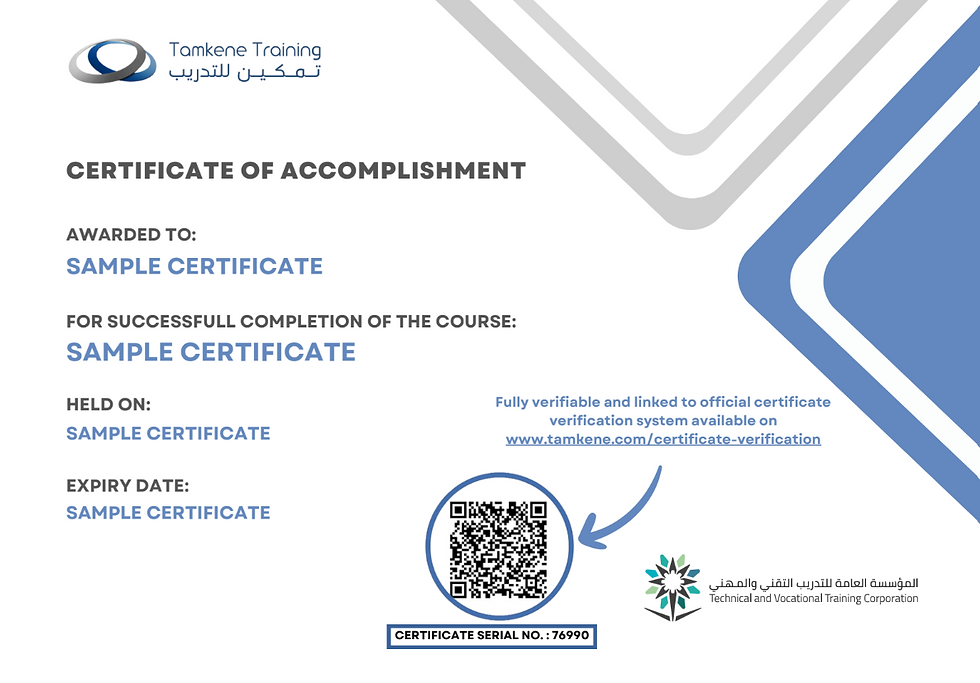
Certificate of Successful Completion
Certification is provided upon successful completion. The certificate can be verified through a QR-Code system.
Course Overview
This comprehensive Scaffolding Supervision training course provides participants with essential knowledge and practical skills required for supervising scaffold erection, use, and dismantling in construction and industrial environments. The course covers fundamental scaffold safety principles along with critical supervisory techniques for inspection, hazard identification, and regulatory compliance aligned with OSHA 29 CFR 1926 Subpart L Scaffolds, ANSI/ASSE A10.8 Scaffolding Safety Requirements, EN 12811 European Scaffold Standards, and competent person qualification requirements.
Participants will learn to apply regulatory requirements and proven supervision methods to inspect scaffolds, identify hazards, ensure proper design and installation, and protect workers. This course combines theoretical concepts with extensive practical exercises and hands-on inspection demonstrations to ensure participants gain valuable skills applicable to their professional environment while emphasizing fall protection, structural integrity, and daily oversight responsibilities.
Key Learning Objectives
Understand OSHA Subpart L scaffold regulations and competent person duties
Identify scaffold types, components, and design load requirements
Conduct comprehensive scaffold inspections using standardized criteria
Recognize and control scaffold hazards including falls and structural failures
Implement fall protection systems and guardrail requirements properly
Apply safe access, capacity, and platform requirements per OSHA
Evaluate scaffold erection, modification, and dismantling procedures
Document inspections and enforce scaffold safety compliance effectively
Course Outline
1. Introduction to Scaffold Supervision and Regulation
1.1 Scaffold Safety Overview
Scaffold accident statistics including (falls leading cause, structural failure, struck-by falling objects, preventable incidents, supervision importance)
OSHA 29 CFR 1926 Subpart L including (comprehensive scaffold regulations, specific requirements by type, general requirements, training, inspection)
Employer responsibilities including (competent person designation, training provision, proper scaffold, inspection, hazard correction, compliance)
Employee responsibilities including (training compliance, proper use, reporting hazards, fall protection use, no modification without authorization)
Course objectives including (competent person qualification, inspection skills, hazard recognition, regulatory compliance, supervision techniques)
1.2 Competent Person Requirements
Competent person definition per OSHA 1926.450 including (capable of identifying hazards, authority to take prompt corrective measures, knowledge training and experience)
Competent person duties including (scaffold inspection, hazard identification, corrective action, employee training, work supervision, daily oversight)
Qualification requirements including (training, knowledge of standards, scaffold types, hazard recognition, experience, employer designation)
Qualified person distinction including (design, specialized knowledge, engineer for some applications, calculations, complex systems)
Documentation including (competent person designation, training records, inspection documentation, corrective actions, authority)
1.3 Scaffold Training Requirements per 1926.454
Training topics per OSHA including (hazard nature, correct procedures, scaffold capacity, platform construction, fall protection, electrical hazards)
Training when required including (before work, when hazards change, scaffold type changes, inadequate knowledge, retraining as needed)
Trainer qualifications including (competent person or qualified person, knowledge and experience, training delivery, evaluation)
Training documentation including (employee name, trainer name, date, training topics, employer certification, records)
2. Scaffold Types and Components
2.1 Supported Scaffold Types
Frame scaffolds (tubular welded frame) including (most common, end frames, cross braces, platforms, adjustable base plates, casters)
Tube and coupler scaffolds including (metal tubes, couplers for connections, flexible configuration, heavy-duty, right-angle/swivel couplers)
System scaffolds including (prefabricated components, integral connections, rosette/cup-lock/ring-lock systems, modular, quick assembly)
Mobile scaffolds including (casters, locking mechanisms, height-to-base ratio, outriggers, level surface, stable)
Pole scaffolds including (single-pole, independent-pole, double-pole, wood or metal, ledgers, braces)
Other supported types including (ladder jack, pump jack, plasterer/decorator/bricklayer scaffolds, special-purpose, specific regulations)
2.2 Suspended Scaffold Types
Two-point adjustable suspension scaffolds including (swing stages, powered hoist, wire rope, platform, guardrails, fall arrest)
Single-point adjustable including (boatswain's chair, powered platform, window washing, inspection, fall arrest required)
Multi-point adjustable including (multiple suspension points, large platforms, synchronized hoists, building maintenance)
Catenary scaffolds including (horizontal lifeline support, platform suspension, specialized applications)
Float/ship scaffolds including (suspended from overhead supports, access side of structure, shipyards)
2.3 Scaffold Components and Terminology
Frames and standards including (vertical members, load-bearing, end frames, posts, uprights, connection points)
Bearers and runners including (horizontal load-carrying members, frames rest on bearers, ledgers, bottom horizontal member)
Couplers including (right-angle, swivel, sleeve, load-rated, tube and coupler connections, tightness)
Platforms and planks including (work surface, solid sawn wood, fabricated planks, metal/plywood, full decking, gap limits)
Guardrails including (top rail 42±3 inches, midrail, toeboards, strength requirements 200 lbs top rail, screens if needed)
Access components including (ladders, stair towers, ramps, gates, safe means, proper location)
Base plates and mud sills including (load distribution, solid footing, adjustment, screw jacks, foundation)
3. General Scaffold Requirements per OSHA 1926.451
3.1 Capacity and Loading
Capacity per 1926.451(f) including (light duty 25 psf, medium duty 50 psf, heavy duty 75 psf, intended load, design requirement)
Uniform distributed load including (weight per square foot, material and workers combined, not concentrated, design factor 4:1)
Design load including (intended load known, posted on scaffold, not exceed, structural adequacy, calculations if needed)
Load factors including (design factor 4:1 suspension ropes/components, load rating verification, structural integrity, working loads)
Overloading prohibition including (exceeding rated capacity, instability, structural failure, material accumulation limits, supervision)
3.2 Platform Construction per 1926.451(b)
Platform width including (minimum 18 inches, fully planked, between uprights, work surface adequate)
Platform planking including (overlap minimum 12 inches, extend 6-12 inches beyond supports, secured, no gaps >1 inch, solid)
Platform gaps including (maximum 1 inch between planks, maximum 9.5 inches from uprights, no openings, fall protection)
Plank grading including (scaffold-grade lumber, fabricated planks per manufacturer, inspection grade stamps, strength adequate, no defects)
Decking materials including (solid sawn wood 2-inch nominal minimum, fabricated planks, metal, plywood marine-grade, laminated veneer)
Platform defects including (no use if damaged, splits, cracks, warping, missing components, inspection before use)
3.3 Supported Scaffold Criteria per 1926.451(c)
Footings and anchorage including (firm foundation, mud sills if needed, level, base plates, screw jacks, adequate support)
Guys, ties, and braces including (prevent tipping, specific intervals, rigid, every 26 feet vertical and 30 feet horizontal typical)
Vertical spacing of horizontal members including (proper intervals, bracing, stability, frame spacing, connections secure)
Platform height including (working levels designated, guardrails required, fall protection, proper elevation for work)
4. Fall Protection Requirements for Scaffolds
4.1 Guardrail Systems per 1926.451(g)
Guardrail requirements including (each open side and end, front edge, top rail height 42±3 inches, midrail, strength 200 lbs)
Top rail height including (38 inches minimum to 45 inches maximum, 42 inches ±3 inches target, proper height critical)
Midrail including (installed midway between top rail and platform, approximately 21 inches, prevent through-fall)
Toeboards including (minimum 3.5 inches high, gaps not over 0.25 inches, when tools/materials, objects falling hazard)
Screens or mesh including (between toeboard and top rail or midrail, if objects falling, intermediate vertical members alternative)
Guardrail strength per 1926.451(g)(4) including (top rail 200 lbs top or outward, midrail 150 lbs, components withstand, no failure)
4.2 Personal Fall Arrest Systems (PFAS)
PFAS when required including (guardrails not feasible, suspension scaffolds, boatswain's chair, alternative to guardrails if compliant)
PFAS components including (full-body harness, lanyard/lifeline, anchorage point, deceleration device, proper connection)
Anchorage requirements per 1926.502(d) including (5,000 lbs per person or 2:1 safety factor, independent of scaffold, structural adequacy)
Free fall distance including (maximum 6 feet, lanyard length, positioning, deceleration distance, total fall distance limits)
PFAS inspection including (before each use, competent person, damage, wear, manufacturer criteria, removal if deficient)
4.3 Fall Protection for Specific Scaffold Types
Suspension scaffolds including (guardrails and PFAS required, two-point adjustable, independent lifelines, anchorage separate from suspension)
Mobile scaffolds including (guardrails on all open sides, no climbing while moving, locking casters when in use)
Ladder jack scaffolds including (fall protection required over 10 feet, guardrails or PFAS, platform width limits)
Pole scaffolds including (guardrails or PFAS over 10 feet, guardrail requirements, proper installation)
5. Access and Egress Requirements
5.1 Safe Access per 1926.451(e)
Access required including (when scaffold platforms more than 2 feet above/below access point, safe means, proper design)
Acceptable access including (hook-on/attachable ladders, stair towers, ramps, integral prefabricated frames, portable ladders, direct access)
Prohibited access including (no cross-brace climbing frame scaffolds, structural instability, foot/hand injury, fall hazard)
Ladder requirements including (extend 3 feet above platform, secured, proper angle, rungs/steps, adequate strength)
5.2 Scaffold Stairways and Ladders
Stair tower specifications including (stairs when cross-braces prohibited, proper pitch, handrails, landings, safer access)
Hook-on and attachable ladders including (specifically designed, secured, proper spacing, rungs 12 inches wide minimum)
Portable ladders including (positioned properly, secured, 3-to-1 angle, extension above, inspection, capacity)
Access gates including (self-closing, toeboard equivalent when closed, chain across opening alternative)
5.3 Walkways and Ramps
Ramp specifications per 1926.451(e)(5) including (maximum slope 1:3, cleated if steeper than 1:8, slip-resistant, no slippery conditions)
Walkways including (minimum 18 inches wide, planked fully, guardrails if elevated, proper support, regular inspection)
6. Scaffold Inspection Procedures
6.1 Inspection Frequency and Timing
Before each work shift per 1926.451(f)(3) including (competent person, after any occurrence, weather events, daily requirement, beginning of shift)
After alterations including (any modification, moving, component change, inspection before use)
After incidents including (structural load, impact, weather damage, material failure, immediate inspection and evaluation)
Periodic inspections including (during use, ongoing monitoring, changes observed, competent person surveillance)
6.2 Inspection Checklist and Criteria
Structural integrity including (plumb and level, base plates secure, mud sills adequate, connections tight, no damage)
Component condition including (frames, couplers, planks, guardrails, access, no cracks/bends/corrosion/damage)
Platform inspection including (fully decked, gaps <1 inch, proper overlap/extension, secured, planks undamaged, cleated if necessary)
Guardrail system including (top rail 42±3 inches, midrail, toeboards if needed, strength, secure connections, no gaps)
Bracing and ties including (cross bracing, diagonal bracing, guys, ties to structure, proper intervals, connections secure)
Access including (ladders/stairs proper, secured, extend 3 feet, gates functional, safe means provided)
Anchorage and foundations including (stable footing, level, base plates, screw jacks, mud sills, adequate bearing)
Capacity and loading including (posted capacity, not overloaded, materials stored properly, concentration avoided)
6.3 Inspection Documentation
Inspection records including (date, competent person signature, scaffold location/identification, conditions found, deficiencies)
Deficiency documentation including (specific hazard, location, severity, corrective action required, responsible person, completion date)
Corrective action tracking including (deficiency log, work orders, follow-up, verification, sign-off, closeout)
Tag systems including (green safe to use, yellow caution/restricted, red danger/do not use, visible posting, color-coded)
7. Hazard Recognition and Control
7.1 Fall Hazards
Unprotected sides and edges including (missing guardrails, incomplete platforms, gaps, improper guardrail height, end protection)
Access fall hazards including (climbing cross braces, inadequate ladder, improper ladder placement, no access provided)
Planking deficiencies including (gaps, unsecured planks, overhang/overlap improper, damaged planks, insufficient width)
Fall protection controls including (guardrails primary, PFAS alternative, proper installation, inspection, enforcement)
7.2 Structural Hazards
Overloading including (exceeding rated capacity, material accumulation, concentrated loads, equipment weight, worker congestion)
Inadequate bracing including (missing cross braces, loose connections, improper intervals, instability, lateral movement)
Poor foundation including (soft ground, uneven, inadequate mud sills, settling, frost heave, undermining)
Damaged components including (bent frames, cracked couplers, corroded parts, weakened planks, continued use prohibited)
Structural controls including (design loads, proper erection, quality components, inspection, maintenance, engineering for complex)
7.3 Environmental and Other Hazards
Weather hazards including (wind, ice/snow accumulation, rain slippery surfaces, lightning, temperature extremes, work restrictions)
Electrical hazards per 1926.451(f)(6) including (overhead power lines, minimum clearances, insulated lines/de-energization/barriers, contact prevention)
Falling object hazards including (toeboards, debris nets, canopies, barricades below, hard hats required, controlled access)
Struck-by hazards including (swinging loads, moving equipment, material handling, overhead work, exclusion zones)
8. Erection, Modification, and Dismantling
8.1 Erection Procedures
Erection planning including (manufacturer instructions, engineering if required, sequence, crew training, supervision, safety procedures)
Foundation preparation including (level, compacted, adequate bearing capacity, mud sills, base plates, screw jacks adjusted)
Frame erection sequence including (first level plumb and level, cross bracing, connections tight, progression upward, inspection at each level)
Platform installation including (fully decked, proper overlap, secured to scaffold, gaps minimized, safe working surface)
Guardrail installation including (as work progresses, completed before use, fall protection during erection if exposed)
Tie-in and bracing including (anchored to structure per intervals, prevents tipping, rigid connections, before next level)
8.2 Modification and Alteration
Authorization required including (competent person approval, no unauthorized changes, worker prohibition, hazard creation)
Inspection after modification including (competent person, before use, structural integrity, capacity, fall protection)
Common modifications including (adding/removing components, extending height, relocating, access changes, capacity adjustments)
Documentation including (modification approval, inspection, capacity change, training if needed, communication)
8.3 Dismantling Procedures
Dismantling planning including (reverse of erection, top-down typically, fall protection maintained, controlled process, supervision)
Material lowering including (controlled descent, no throwing, rigging, tag lines, ground personnel, coordination)
Component inspection during dismantling including (damage assessment, segregation, repair/disposal, inventory, storage)
Fall protection during dismantling including (guardrails maintain, PFAS if needed, exposure minimized, competent person oversight)
9. Special Scaffold Situations and Applications
9.1 Mobile Scaffolds per 1926.452(w)
Mobile scaffold requirements including (height-to-base ratio 4:1 maximum or outriggers, level surface, casters locked when occupied)
Outriggers including (when height >4× minimum base, stability, proper extension, level, connection to scaffold)
Moving scaffolds including (workers off platform, clear overhead, level surface, slow controlled, competent person)
Force to move including (horizontal force at base, no more than 50 lbs nominal, excessive resistance indication instability)
9.2 Suspension Scaffolds per 1926.452(o)
Two-point adjustable suspension including (independent lifelines, guardrails, PFAS, corrosion-resistant ropes, design requirements, inspection)
Rigging and suspension including (secure anchorage, structural adequacy, overhang beams, counterweights, stabilization, calculations)
Hoisting equipment including (rated capacity, inspections, brakes, emergency descent, electrical, controls, safeguards)
Work practices including (tied-off before boarding, on platform only while suspended, no sudden movements, weather limits)
9.3 Scaffold Use Near Overhead Power Lines
Clearance requirements per 1926.451(f)(6) including (insulated/de-energized or maintain minimum distance, voltage-dependent, ≤300V: 3 feet, >300V: 10 feet +0.4 inches per kV over 300V)
Protective measures including (insulated barriers, de-energization with lockout/tagout, warning signs, employee training, competent person)
Conductive materials including (metal scaffolds, tools, materials, wire rope, contact prevention, grounding not sufficient)
10. Supervision, Enforcement, and Best Practices
10.1 Effective Scaffold Supervision
Daily oversight including (pre-shift inspection, work monitoring, hazard correction, enforcement, worker communication, documentation)
Competent person presence including (on-site availability, accessible, authority, decision-making, responsive, continuous)
Hazard communication including (toolbox talks, hazard identification, safety meetings, corrective action, employee feedback, open dialogue)
Behavior observation including (safe work practices, fall protection use, capacity limits, access use, horseplay prevention)
10.2 Enforcement and Corrective Action
Stop work authority including (unsafe conditions, immediate hazard, competent person, no retaliation, resume only when corrected)
Red tag procedure including (danger tags, out of service, visible marking, access prevention, removal only by competent person)
Corrective action process including (identification, documentation, priority, assignment, verification, sign-off, training if needed)
Progressive discipline including (verbal warning, written warning, suspension, termination, policy, consistency, documentation)
10.3 Best Practices and Continuous Improvement
Pre-use meetings including (daily brief, hazards discussion, inspection findings, weather, tasks, questions)
Training reinforcement including (ongoing, new equipment, refresher, incidents, regulatory updates, competency verification)
Incident investigation including (near-miss and injury, root cause, lessons learned, corrective action, sharing, prevention)
Audit and inspection programs including (scheduled audits, management review, third-party assessment, trend analysis, continuous improvement)
Industry standards including (ANSI A10.8, manufacturer guidelines, best practices, industry associations, technology advancements)
1. Introduction to Scaffold Supervision and Regulation
1.1 Scaffold Safety Overview
Scaffold accident statistics including (falls leading cause, structural failure, struck-by falling objects, preventable incidents, supervision importance)
OSHA 29 CFR 1926 Subpart L including (comprehensive scaffold regulations, specific requirements by type, general requirements, training, inspection)
Employer responsibilities including (competent person designation, training provision, proper scaffold, inspection, hazard correction, compliance)
Employee responsibilities including (training compliance, proper use, reporting hazards, fall protection use, no modification without authorization)
Course objectives including (competent person qualification, inspection skills, hazard recognition, regulatory compliance, supervision techniques)
1.2 Competent Person Requirements
Competent person definition per OSHA 1926.450 including (capable of identifying hazards, authority to take prompt corrective measures, knowledge training and experience)
Competent person duties including (scaffold inspection, hazard identification, corrective action, employee training, work supervision, daily oversight)
Qualification requirements including (training, knowledge of standards, scaffold types, hazard recognition, experience, employer designation)
Qualified person distinction including (design, specialized knowledge, engineer for some applications, calculations, complex systems)
Documentation including (competent person designation, training records, inspection documentation, corrective actions, authority)
1.3 Scaffold Training Requirements per 1926.454
Training topics per OSHA including (hazard nature, correct procedures, scaffold capacity, platform construction, fall protection, electrical hazards)
Training when required including (before work, when hazards change, scaffold type changes, inadequate knowledge, retraining as needed)
Trainer qualifications including (competent person or qualified person, knowledge and experience, training delivery, evaluation)
Training documentation including (employee name, trainer name, date, training topics, employer certification, records)
2. Scaffold Types and Components
2.1 Supported Scaffold Types
Frame scaffolds (tubular welded frame) including (most common, end frames, cross braces, platforms, adjustable base plates, casters)
Tube and coupler scaffolds including (metal tubes, couplers for connections, flexible configuration, heavy-duty, right-angle/swivel couplers)
System scaffolds including (prefabricated components, integral connections, rosette/cup-lock/ring-lock systems, modular, quick assembly)
Mobile scaffolds including (casters, locking mechanisms, height-to-base ratio, outriggers, level surface, stable)
Pole scaffolds including (single-pole, independent-pole, double-pole, wood or metal, ledgers, braces)
Other supported types including (ladder jack, pump jack, plasterer/decorator/bricklayer scaffolds, special-purpose, specific regulations)
2.2 Suspended Scaffold Types
Two-point adjustable suspension scaffolds including (swing stages, powered hoist, wire rope, platform, guardrails, fall arrest)
Single-point adjustable including (boatswain's chair, powered platform, window washing, inspection, fall arrest required)
Multi-point adjustable including (multiple suspension points, large platforms, synchronized hoists, building maintenance)
Catenary scaffolds including (horizontal lifeline support, platform suspension, specialized applications)
Float/ship scaffolds including (suspended from overhead supports, access side of structure, shipyards)
2.3 Scaffold Components and Terminology
Frames and standards including (vertical members, load-bearing, end frames, posts, uprights, connection points)
Bearers and runners including (horizontal load-carrying members, frames rest on bearers, ledgers, bottom horizontal member)
Couplers including (right-angle, swivel, sleeve, load-rated, tube and coupler connections, tightness)
Platforms and planks including (work surface, solid sawn wood, fabricated planks, metal/plywood, full decking, gap limits)
Guardrails including (top rail 42±3 inches, midrail, toeboards, strength requirements 200 lbs top rail, screens if needed)
Access components including (ladders, stair towers, ramps, gates, safe means, proper location)
Base plates and mud sills including (load distribution, solid footing, adjustment, screw jacks, foundation)
3. General Scaffold Requirements per OSHA 1926.451
3.1 Capacity and Loading
Capacity per 1926.451(f) including (light duty 25 psf, medium duty 50 psf, heavy duty 75 psf, intended load, design requirement)
Uniform distributed load including (weight per square foot, material and workers combined, not concentrated, design factor 4:1)
Design load including (intended load known, posted on scaffold, not exceed, structural adequacy, calculations if needed)
Load factors including (design factor 4:1 suspension ropes/components, load rating verification, structural integrity, working loads)
Overloading prohibition including (exceeding rated capacity, instability, structural failure, material accumulation limits, supervision)
3.2 Platform Construction per 1926.451(b)
Platform width including (minimum 18 inches, fully planked, between uprights, work surface adequate)
Platform planking including (overlap minimum 12 inches, extend 6-12 inches beyond supports, secured, no gaps >1 inch, solid)
Platform gaps including (maximum 1 inch between planks, maximum 9.5 inches from uprights, no openings, fall protection)
Plank grading including (scaffold-grade lumber, fabricated planks per manufacturer, inspection grade stamps, strength adequate, no defects)
Decking materials including (solid sawn wood 2-inch nominal minimum, fabricated planks, metal, plywood marine-grade, laminated veneer)
Platform defects including (no use if damaged, splits, cracks, warping, missing components, inspection before use)
3.3 Supported Scaffold Criteria per 1926.451(c)
Footings and anchorage including (firm foundation, mud sills if needed, level, base plates, screw jacks, adequate support)
Guys, ties, and braces including (prevent tipping, specific intervals, rigid, every 26 feet vertical and 30 feet horizontal typical)
Vertical spacing of horizontal members including (proper intervals, bracing, stability, frame spacing, connections secure)
Platform height including (working levels designated, guardrails required, fall protection, proper elevation for work)
4. Fall Protection Requirements for Scaffolds
4.1 Guardrail Systems per 1926.451(g)
Guardrail requirements including (each open side and end, front edge, top rail height 42±3 inches, midrail, strength 200 lbs)
Top rail height including (38 inches minimum to 45 inches maximum, 42 inches ±3 inches target, proper height critical)
Midrail including (installed midway between top rail and platform, approximately 21 inches, prevent through-fall)
Toeboards including (minimum 3.5 inches high, gaps not over 0.25 inches, when tools/materials, objects falling hazard)
Screens or mesh including (between toeboard and top rail or midrail, if objects falling, intermediate vertical members alternative)
Guardrail strength per 1926.451(g)(4) including (top rail 200 lbs top or outward, midrail 150 lbs, components withstand, no failure)
4.2 Personal Fall Arrest Systems (PFAS)
PFAS when required including (guardrails not feasible, suspension scaffolds, boatswain's chair, alternative to guardrails if compliant)
PFAS components including (full-body harness, lanyard/lifeline, anchorage point, deceleration device, proper connection)
Anchorage requirements per 1926.502(d) including (5,000 lbs per person or 2:1 safety factor, independent of scaffold, structural adequacy)
Free fall distance including (maximum 6 feet, lanyard length, positioning, deceleration distance, total fall distance limits)
PFAS inspection including (before each use, competent person, damage, wear, manufacturer criteria, removal if deficient)
4.3 Fall Protection for Specific Scaffold Types
Suspension scaffolds including (guardrails and PFAS required, two-point adjustable, independent lifelines, anchorage separate from suspension)
Mobile scaffolds including (guardrails on all open sides, no climbing while moving, locking casters when in use)
Ladder jack scaffolds including (fall protection required over 10 feet, guardrails or PFAS, platform width limits)
Pole scaffolds including (guardrails or PFAS over 10 feet, guardrail requirements, proper installation)
5. Access and Egress Requirements
5.1 Safe Access per 1926.451(e)
Access required including (when scaffold platforms more than 2 feet above/below access point, safe means, proper design)
Acceptable access including (hook-on/attachable ladders, stair towers, ramps, integral prefabricated frames, portable ladders, direct access)
Prohibited access including (no cross-brace climbing frame scaffolds, structural instability, foot/hand injury, fall hazard)
Ladder requirements including (extend 3 feet above platform, secured, proper angle, rungs/steps, adequate strength)
5.2 Scaffold Stairways and Ladders
Stair tower specifications including (stairs when cross-braces prohibited, proper pitch, handrails, landings, safer access)
Hook-on and attachable ladders including (specifically designed, secured, proper spacing, rungs 12 inches wide minimum)
Portable ladders including (positioned properly, secured, 3-to-1 angle, extension above, inspection, capacity)
Access gates including (self-closing, toeboard equivalent when closed, chain across opening alternative)
5.3 Walkways and Ramps
Ramp specifications per 1926.451(e)(5) including (maximum slope 1:3, cleated if steeper than 1:8, slip-resistant, no slippery conditions)
Walkways including (minimum 18 inches wide, planked fully, guardrails if elevated, proper support, regular inspection)
6. Scaffold Inspection Procedures
6.1 Inspection Frequency and Timing
Before each work shift per 1926.451(f)(3) including (competent person, after any occurrence, weather events, daily requirement, beginning of shift)
After alterations including (any modification, moving, component change, inspection before use)
After incidents including (structural load, impact, weather damage, material failure, immediate inspection and evaluation)
Periodic inspections including (during use, ongoing monitoring, changes observed, competent person surveillance)
6.2 Inspection Checklist and Criteria
Structural integrity including (plumb and level, base plates secure, mud sills adequate, connections tight, no damage)
Component condition including (frames, couplers, planks, guardrails, access, no cracks/bends/corrosion/damage)
Platform inspection including (fully decked, gaps <1 inch, proper overlap/extension, secured, planks undamaged, cleated if necessary)
Guardrail system including (top rail 42±3 inches, midrail, toeboards if needed, strength, secure connections, no gaps)
Bracing and ties including (cross bracing, diagonal bracing, guys, ties to structure, proper intervals, connections secure)
Access including (ladders/stairs proper, secured, extend 3 feet, gates functional, safe means provided)
Anchorage and foundations including (stable footing, level, base plates, screw jacks, mud sills, adequate bearing)
Capacity and loading including (posted capacity, not overloaded, materials stored properly, concentration avoided)
6.3 Inspection Documentation
Inspection records including (date, competent person signature, scaffold location/identification, conditions found, deficiencies)
Deficiency documentation including (specific hazard, location, severity, corrective action required, responsible person, completion date)
Corrective action tracking including (deficiency log, work orders, follow-up, verification, sign-off, closeout)
Tag systems including (green safe to use, yellow caution/restricted, red danger/do not use, visible posting, color-coded)
7. Hazard Recognition and Control
7.1 Fall Hazards
Unprotected sides and edges including (missing guardrails, incomplete platforms, gaps, improper guardrail height, end protection)
Access fall hazards including (climbing cross braces, inadequate ladder, improper ladder placement, no access provided)
Planking deficiencies including (gaps, unsecured planks, overhang/overlap improper, damaged planks, insufficient width)
Fall protection controls including (guardrails primary, PFAS alternative, proper installation, inspection, enforcement)
7.2 Structural Hazards
Overloading including (exceeding rated capacity, material accumulation, concentrated loads, equipment weight, worker congestion)
Inadequate bracing including (missing cross braces, loose connections, improper intervals, instability, lateral movement)
Poor foundation including (soft ground, uneven, inadequate mud sills, settling, frost heave, undermining)
Damaged components including (bent frames, cracked couplers, corroded parts, weakened planks, continued use prohibited)
Structural controls including (design loads, proper erection, quality components, inspection, maintenance, engineering for complex)
7.3 Environmental and Other Hazards
Weather hazards including (wind, ice/snow accumulation, rain slippery surfaces, lightning, temperature extremes, work restrictions)
Electrical hazards per 1926.451(f)(6) including (overhead power lines, minimum clearances, insulated lines/de-energization/barriers, contact prevention)
Falling object hazards including (toeboards, debris nets, canopies, barricades below, hard hats required, controlled access)
Struck-by hazards including (swinging loads, moving equipment, material handling, overhead work, exclusion zones)
8. Erection, Modification, and Dismantling
8.1 Erection Procedures
Erection planning including (manufacturer instructions, engineering if required, sequence, crew training, supervision, safety procedures)
Foundation preparation including (level, compacted, adequate bearing capacity, mud sills, base plates, screw jacks adjusted)
Frame erection sequence including (first level plumb and level, cross bracing, connections tight, progression upward, inspection at each level)
Platform installation including (fully decked, proper overlap, secured to scaffold, gaps minimized, safe working surface)
Guardrail installation including (as work progresses, completed before use, fall protection during erection if exposed)
Tie-in and bracing including (anchored to structure per intervals, prevents tipping, rigid connections, before next level)
8.2 Modification and Alteration
Authorization required including (competent person approval, no unauthorized changes, worker prohibition, hazard creation)
Inspection after modification including (competent person, before use, structural integrity, capacity, fall protection)
Common modifications including (adding/removing components, extending height, relocating, access changes, capacity adjustments)
Documentation including (modification approval, inspection, capacity change, training if needed, communication)
8.3 Dismantling Procedures
Dismantling planning including (reverse of erection, top-down typically, fall protection maintained, controlled process, supervision)
Material lowering including (controlled descent, no throwing, rigging, tag lines, ground personnel, coordination)
Component inspection during dismantling including (damage assessment, segregation, repair/disposal, inventory, storage)
Fall protection during dismantling including (guardrails maintain, PFAS if needed, exposure minimized, competent person oversight)
9. Special Scaffold Situations and Applications
9.1 Mobile Scaffolds per 1926.452(w)
Mobile scaffold requirements including (height-to-base ratio 4:1 maximum or outriggers, level surface, casters locked when occupied)
Outriggers including (when height >4× minimum base, stability, proper extension, level, connection to scaffold)
Moving scaffolds including (workers off platform, clear overhead, level surface, slow controlled, competent person)
Force to move including (horizontal force at base, no more than 50 lbs nominal, excessive resistance indication instability)
9.2 Suspension Scaffolds per 1926.452(o)
Two-point adjustable suspension including (independent lifelines, guardrails, PFAS, corrosion-resistant ropes, design requirements, inspection)
Rigging and suspension including (secure anchorage, structural adequacy, overhang beams, counterweights, stabilization, calculations)
Hoisting equipment including (rated capacity, inspections, brakes, emergency descent, electrical, controls, safeguards)
Work practices including (tied-off before boarding, on platform only while suspended, no sudden movements, weather limits)
9.3 Scaffold Use Near Overhead Power Lines
Clearance requirements per 1926.451(f)(6) including (insulated/de-energized or maintain minimum distance, voltage-dependent, ≤300V: 3 feet, >300V: 10 feet +0.4 inches per kV over 300V)
Protective measures including (insulated barriers, de-energization with lockout/tagout, warning signs, employee training, competent person)
Conductive materials including (metal scaffolds, tools, materials, wire rope, contact prevention, grounding not sufficient)
10. Supervision, Enforcement, and Best Practices
10.1 Effective Scaffold Supervision
Daily oversight including (pre-shift inspection, work monitoring, hazard correction, enforcement, worker communication, documentation)
Competent person presence including (on-site availability, accessible, authority, decision-making, responsive, continuous)
Hazard communication including (toolbox talks, hazard identification, safety meetings, corrective action, employee feedback, open dialogue)
Behavior observation including (safe work practices, fall protection use, capacity limits, access use, horseplay prevention)
10.2 Enforcement and Corrective Action
Stop work authority including (unsafe conditions, immediate hazard, competent person, no retaliation, resume only when corrected)
Red tag procedure including (danger tags, out of service, visible marking, access prevention, removal only by competent person)
Corrective action process including (identification, documentation, priority, assignment, verification, sign-off, training if needed)
Progressive discipline including (verbal warning, written warning, suspension, termination, policy, consistency, documentation)
10.3 Best Practices and Continuous Improvement
Pre-use meetings including (daily brief, hazards discussion, inspection findings, weather, tasks, questions)
Training reinforcement including (ongoing, new equipment, refresher, incidents, regulatory updates, competency verification)
Incident investigation including (near-miss and injury, root cause, lessons learned, corrective action, sharing, prevention)
Audit and inspection programs including (scheduled audits, management review, third-party assessment, trend analysis, continuous improvement)
Industry standards including (ANSI A10.8, manufacturer guidelines, best practices, industry associations, technology advancements)
Group Exercises
Scaffold hazard hunt including (team inspection of training scaffold, identifying hazards, discussing corrections, presenting findings)
Erection planning workshop including (developing erection plan for scenario, sequence determination, safety measures, crew assignments)
The importance of proper training in scaffold supervision for preventing falls, ensuring structural integrity, and protecting workers through competent oversight
Gained Core Technical Skills
OSHA 29 CFR 1926 Subpart L regulatory requirements application
Competent person duties and authority execution
Comprehensive scaffold inspection conducting
Scaffold type and component identification
Fall protection system evaluation and enforcement
Platform construction requirement verification
Capacity and loading assessment
Guardrail height and strength checking
Access and egress adequacy determination
Tie-in and bracing interval verification
Hazard recognition and corrective action implementation
Inspection documentation and deficiency tracking
Services Geographical Coverage
In Tamkene Training Center or On-Site: Covering All Saudi Arabia Cities (Dammam - Khobar - Dhahran - Jubail - Qatif - Saihat - Safwa - Ras Tanura - Al Ahsa - Abqaiq - Nairiyah - Hafr Al Batin - Haradh - Khurais - Tanajib - Ras AlKhair - Jafurah - Fadhili - Wasit - Manifa - Berri - Shaybah - Hawiyah - Uthmaniyah - Riyadh - Shaqra - Dhurma - Wasea - AlKharj - Al Majmaah - Sudair - Zulfi - Qassim - Buraydah - Unaizah - Jeddah - Makkah - AlArous - Taif - Rabigh - Madinah - Yanbu - AlUla - Tabuk - NEOM - Oxagon - The Line - Waad AlShamal - Arar - Umluj - Hail - Sakaka - Abha - Khamis Mushait - Najran - Jazan - AlBahah - Jouf - Any City or location in Saudi Arabia)
Targeted Audience
Scaffold Competent Persons requiring qualification training
Construction Supervisors overseeing scaffold work
Safety Managers implementing scaffold programs
Foremen and Lead Workers supervising scaffold crews
Site Superintendents responsible for scaffold safety
Facility Maintenance Supervisors using scaffolds
Safety Officers conducting scaffold inspections
Project Managers ensuring scaffold compliance
Industrial Supervisors managing elevated work
Anyone designated as scaffold competent person
Practical Assessment
Scaffold inspection including (conducting comprehensive inspection using checklist, identifying deficiencies, documenting findings, recommending corrective actions)
Guardrail measurement including (verifying top rail height 42±3 inches, midrail positioning, strength assessment, gap identification)
Component evaluation including (inspecting planks for damage, checking connections, assessing base plates, frame condition, coupler tightness)
Tag application including (determining scaffold status, applying green/yellow/red tags appropriately, documenting rationale, communicating restrictions)
Knowledge Assessment
Technical quizzes on scaffold regulations including (multiple-choice questions on OSHA 1926 Subpart L requirements, competent person duties, fall protection)
Scaffold type identification including (recognizing scaffold types from photos, determining applicable requirements, component naming)
Inspection scenario evaluation including (identifying deficiencies from photos, determining corrective actions, prioritizing hazards)
Calculation exercises including (capacity loading, guardrail height verification, platform gap assessment, clearance distances)
Why Choose This Course
Comprehensive coverage of OSHA 29 CFR 1926 Subpart L requirements
Competent person qualification per regulatory standards
Hands-on scaffold inspection practice and evaluation
Focus on fall protection and structural integrity
Integration of ANSI A10.8 and industry best practices
Emphasis on daily inspection and hazard correction
Real-world scaffold scenarios and deficiency identification
Guardrail, platform, and access requirement details
Erection, modification, and dismantling supervision
Tag systems and enforcement procedures
Documentation and recordkeeping requirements
Regional considerations for Middle East construction scaffolding
Certificate demonstrating scaffold competent person competency
Note: This course outline, including specific topics, modules, and duration, can be customized based on the specific needs and requirements of the client.
.jpg)

Recommended Courses

_edited.jpg)

Suggested Questions

.png)
The training I received from Tamkene was truly exceptional.
Dalal AlSaeed

.png)
Choosing Tamkene for our professional development was a game-changer.
Wafi AlZayer

.png)
Tamkene delivered quality training with a strong focus on standards. The organization and delivery exceeded our expectations.
Saad AlMisehal
Testimonial